Practical Life Skills by Age: 18 Months to 12 Years
Parenting
The small jobs children can do today become the confidence, focus, and responsibility they carry into tomorrow.
Most parents do not wonder whether their child can help. They wonder whether it is worth the spilled water, the slow zipper, and the extra ten minutes it takes to leave the house. The short answer is yes. Practical life skills are not chores added to an already full day. They are how children learn, in a very direct way, that they can care for themselves, contribute to their family, and recover when something goes wrong.
Start smaller than you think. Your goal is not a perfectly folded laundry basket or a child who makes dinner alone. It is a steady ladder of real responsibilities, matched to the hands, attention span, and judgment your child has right now.
Why practical life comes before academics
Before a child can settle into a reading lesson or persist with a math problem, they need a few basic capacities: attention, coordination, sequencing, and confidence after a mistake. Pouring water into a cup asks a child to watch closely, control a wrist, notice when to stop, and clean up a spill. Buttoning a coat asks for bilateral coordination and patience. Setting the table asks a child to remember a sequence and consider someone besides themselves.
Those are academic habits in their earliest form. In Montessori, practical life work gives children a purposeful way to build them. You can see the same idea in a well-prepared classroom and at home: real tools sized for the child, a clear place for each item, and enough time to try without an adult taking over. Our look at Montessori in practice explains how prepared environments turn ordinary tasks into meaningful work.
Independence also changes the emotional temperature of a day. A child who can get a snack, wipe a spill, or find clean socks has more agency. A parent who does not have to do every tiny step has more room to be present.
A practical life task ladder by age
Use these as invitations, not a checklist of milestones. Show one step slowly, then step back. If a task creates daily frustration, make it easier, break it into parts, or return to it in a few weeks.
18 months to 3 years: “I do it.”
At this age, the work is mostly imitation and movement. Choose tasks with a visible beginning and end, and expect a slower pace.
- Carry a small cloth to wipe a low table or a small spill
- Put books back on a low shelf, one at a time
- Place dirty clothes in a hamper and shoes in a basket
- Help load napkins, vegetables, or unbreakable dishes onto the table
- Pour from a small pitcher into a cup with a tray underneath
- Pull up pants, try a zipper, and put arms through a coat
- Water one plant with a small watering can
Keep the setup simple. A child-sized stool, a reachable hook, and two or three accessible cups do more than a long speech about being helpful. For ideas that match this stage, see the Toddler program.
3 to 6 years: “Let me try the whole job.”
Preschool-age children can manage longer sequences when the materials are ready and the job is concrete. Give directions once, demonstrate if needed, and resist correcting every imperfect result.
- Dress independently, including simple fasteners and weather-appropriate layers
- Set and clear the table with plates, napkins, utensils, and cups
- Wash fruit, spread a snack, peel a hard-boiled egg, or slice soft foods with a child-safe knife
- Sort laundry by color, match socks, and put folded items in drawers
- Sweep a small area, use a hand brush and dustpan, and return cleaning tools
- Feed a pet with measured help and refill a water bowl
- Pack a bag for an outing using a short picture or written list
A useful rule here: do not offer help before it is requested. Stand nearby, name what you notice, and ask, “What is your plan?” A crooked napkin is not a problem. A child who learns that effort belongs to them is gaining something larger.
Curious what this looks like in a real classroom?
Schedule a Visit6 to 9 years: “I can be responsible for part of our home.”
Children in this range can plan, follow through, and begin to see how their work affects the household. Give them ownership of recurring jobs rather than only asking for help when an adult is rushed.
- Make a simple breakfast or lunch, including safe cutting and cleanup
- Pack a school bag, refill a water bottle, and check a weather-appropriate clothing list
- Load and unload the dishwasher with guidance about fragile items
- Run a small load of laundry, measure detergent with help, and put clothes away
- Prepare a grocery list from a planned meal and help find items in a store
- Take out recycling, sort mail, and keep a bedroom floor clear enough to vacuum
- Use a simple calendar to track practices, library books, and family plans
Let natural consequences do some teaching. If a child forgets to put a library book in their bag, avoid a rescue trip whenever possible. Help them make a plan for next time instead.
9 to 12 years: “I can plan, contribute, and solve problems.”
Older elementary children are ready for work that requires judgment. They still need coaching, especially with safety and timing, but they can become genuine partners in family life.
- Plan, shop for, prepare, and clean up one simple family meal
- Follow a recipe, adjust portions, and make a list of missing ingredients
- Manage a weekly room reset, including laundry, surfaces, and floors
- Use a budget for a small purchase, compare prices, and keep track of change
- Care for a pet's routine needs with adult oversight
- Make a plan for homework, activities, and needed supplies
- Handle a basic household problem, such as replacing batteries or finding the right contact for a repair
The point is not to turn a 10-year-old into a household manager. It is to give them repeated proof that capable people notice what needs doing and take a next step.
Set up your home in one weekend
You do not need a Montessori makeover. Walk through your home at your child’s eye level and choose three friction points: getting dressed, getting a snack, and cleaning up. Then make each one more possible without an adult.
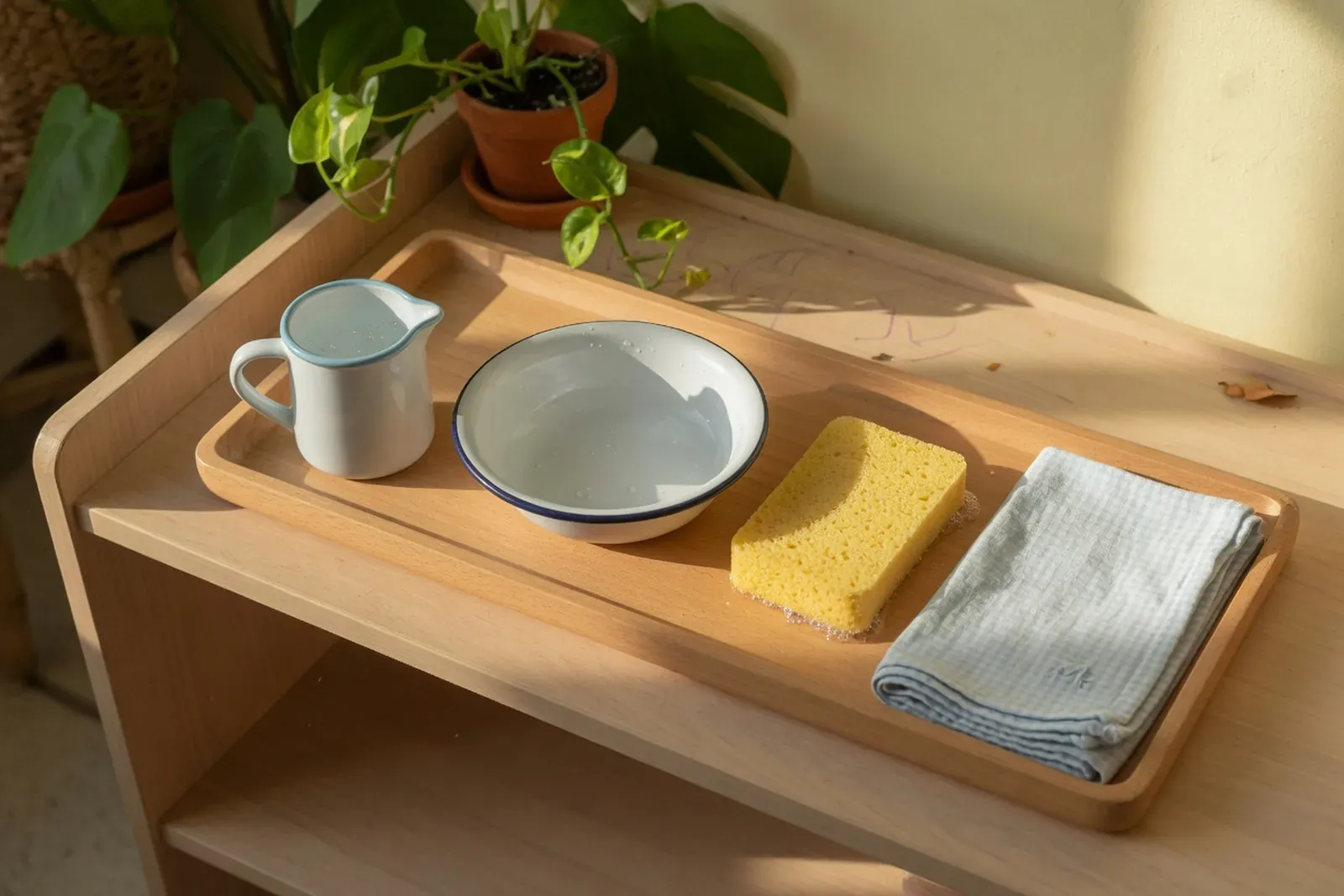
- Put a sturdy stool by the sink, a small cup within reach, and a cloth nearby for spills.
- Create one low hook for a coat and one basket for shoes, rather than asking your child to manage a crowded closet.
- Keep two snack choices on a low shelf, with a plate, napkin, and trash or compost option close by.
- Give cleaning tools a home: a small broom, dustpan, sponge, and spray bottle filled only with water.
- Use baskets or labels for toys, art supplies, and clothes so cleanup has an obvious finish line.
Then protect time. Build a ten-minute margin before school or bedtime so your child can participate. A beautiful setup will not help if every morning ends with, “I’ll do it, we’re late.”
What to stop doing for your child this month
Pick one task you routinely rush through and hand over a piece of it. Maybe you open every snack, carry every backpack, choose every outfit, or clear every dish. Choose the moment that would give your child the most useful ownership, then make the environment support success.
Do not swap doing everything for constant reminders. Instead of “Clean your room,” try “Your laundry is in the basket. What is the first thing you want to put away?” Instead of fixing a spill in silence, hand over the cloth and say, “Water stays on the tray. Let’s take care of it.” The tone matters. You are not assigning punishment. You are trusting your child with real life.
Some days, you will need to move fast. Help without guilt. Independence grows through many ordinary repetitions, not through perfection from either of you.