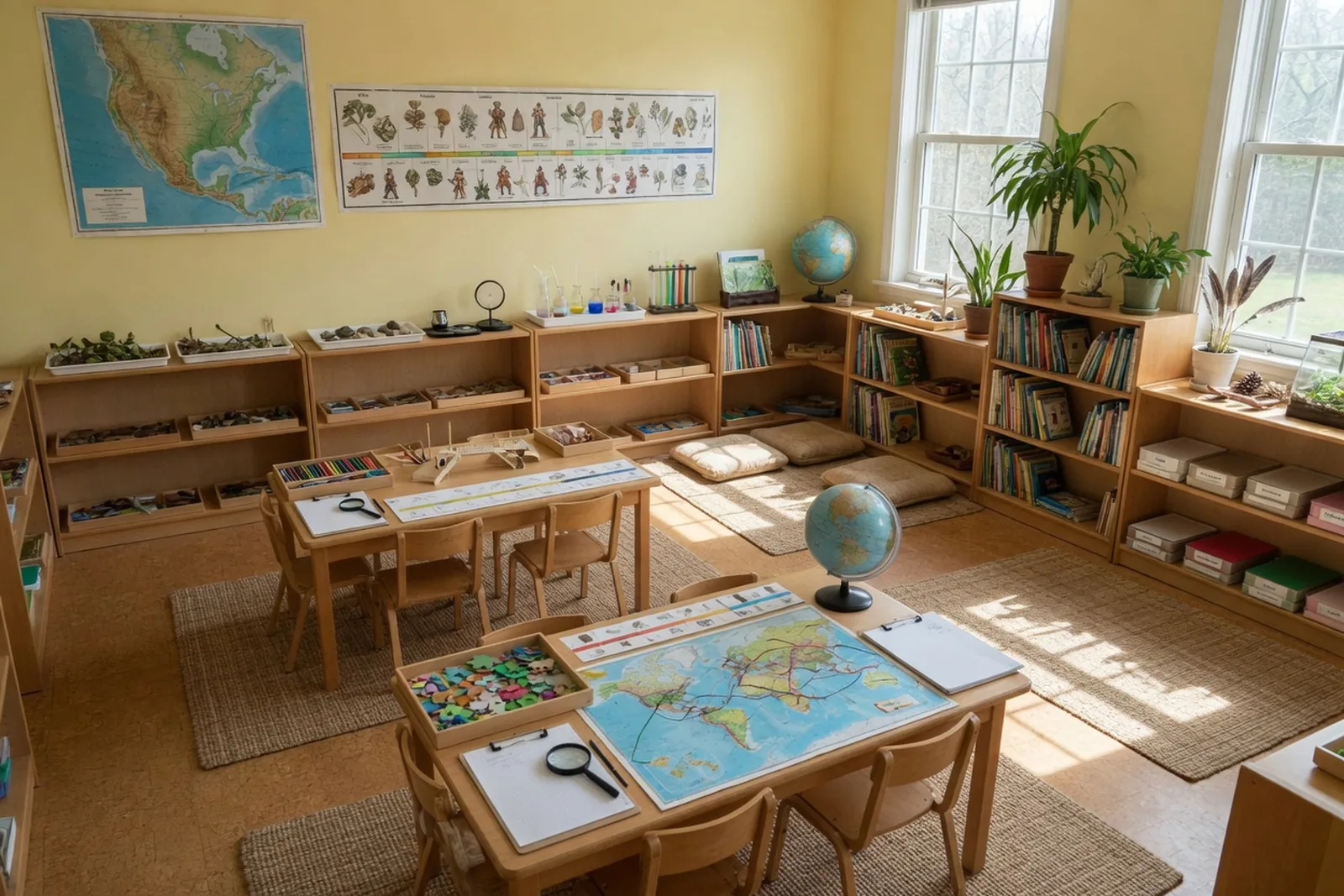
How we practice Montessori, room by room.
The word Montessori is not trademarked, so the substance is what you tour for. Here is exactly how we run our classrooms, from the shelves to the schedule.
Montessori in Practice
What separates real Montessori from the sign out front.
Any preschool can print Montessori on a banner. The method itself is specific.
Real Montessori rests on a few concrete commitments: a prepared room, mixed ages, long stretches of protected time, adults trained to observe before they instruct, and materials sequenced from concrete to abstract. This page walks through how each one works in our classrooms in Chantilly, and what you would see if you stood quietly in a doorway on an ordinary morning. If you want the theory and the evidence behind the practice, start with why Montessori works. This page is the practice itself.
The Prepared Environment
Every room is built for the person using it.
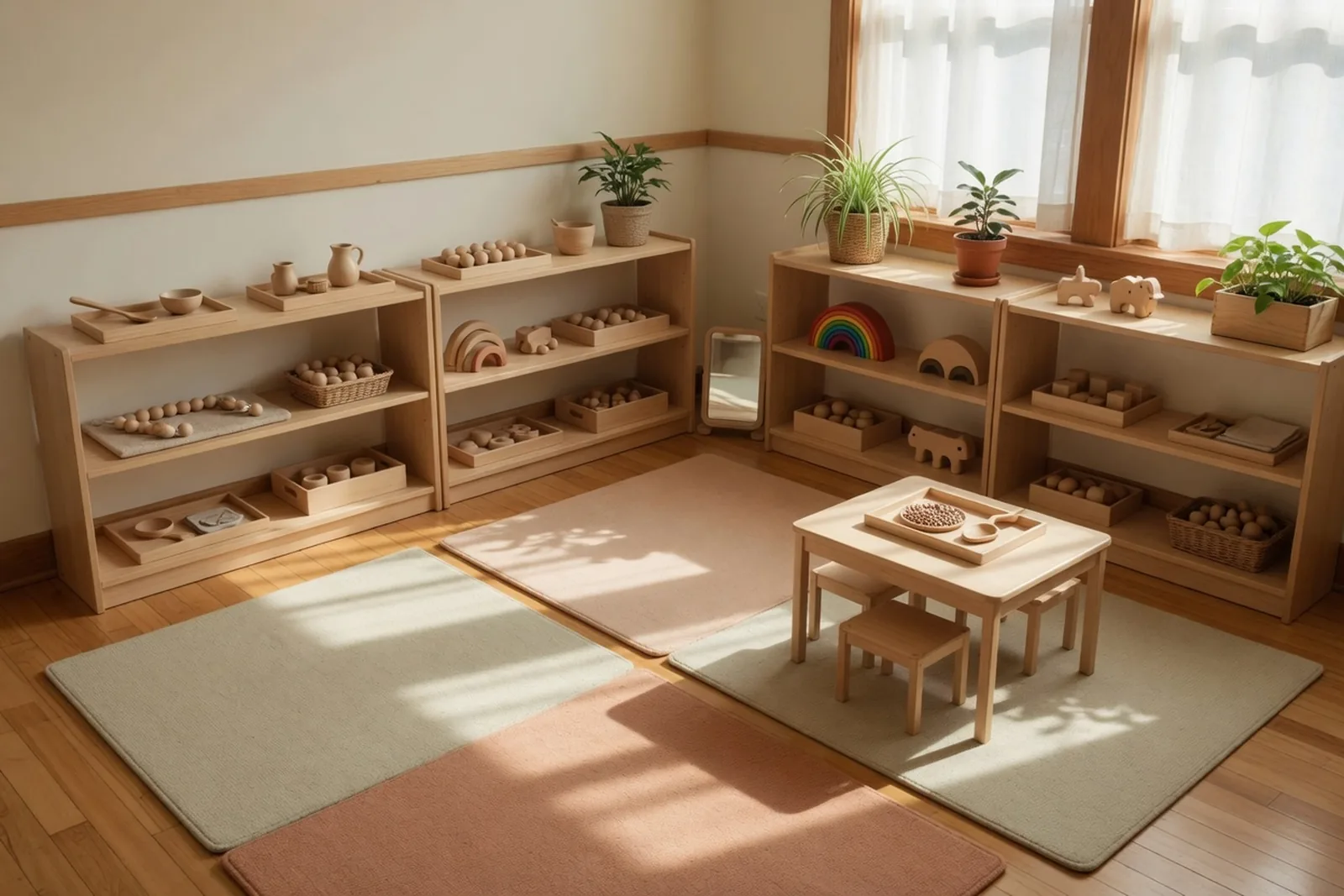
Walk into our toddler room and crouch down. From a child's height, every shelf is reachable, every hook is usable, and every tool fits a small hand. Pitchers hold exactly what a two-year-old can pour. The snack table, the sink, and the cubbies all sit low. Nothing in the room requires an adult by design, because the point of the room is that children can do it themselves.
You will also notice there is exactly one of each material on the shelves. That is deliberate. When the work you want is in use, you wait, watch, or choose something else. Patience and negotiation are not taught in a lesson here. They are built into the furniture.
Mixed Ages
Three years in the same community.
Our classrooms group children in three-year spans: 18 months to 3, 3 to 6, and 6 to 12. A child enters as the youngest, spends a year watching older children work, and grows into the oldest, the one who gives the tour and helps with the coat zippers. Mentorship runs in both directions. Younger children absorb skills by watching, and older children discover they know something worth teaching.
The cycle also means your child keeps the same guide, the same room, and the same classmates long enough to be deeply known. Each September builds on the last instead of starting over. It is a quieter advantage than most parents expect, and we make the case for it in why mixed-age classrooms work. You can also see how the cycle unfolds at every level on our programs pages.
- Toddler, Early Childhood, Kindergarten, Elementary, & Enrichment on one campus
- Around 130 children, so every guide knows every child by name
- A 3:1 ratio in the toddler community
The Work Cycle
The most protected hours of our day.
Every morning, each classroom settles into an uninterrupted work cycle: a long block with no assemblies, no pull-outs, and no adult breaking the room's focus for a transition. A child might spend the whole stretch on one piece of work or move through four. Both are fine. The rule is simple. Concentration, once found, is never casually broken.
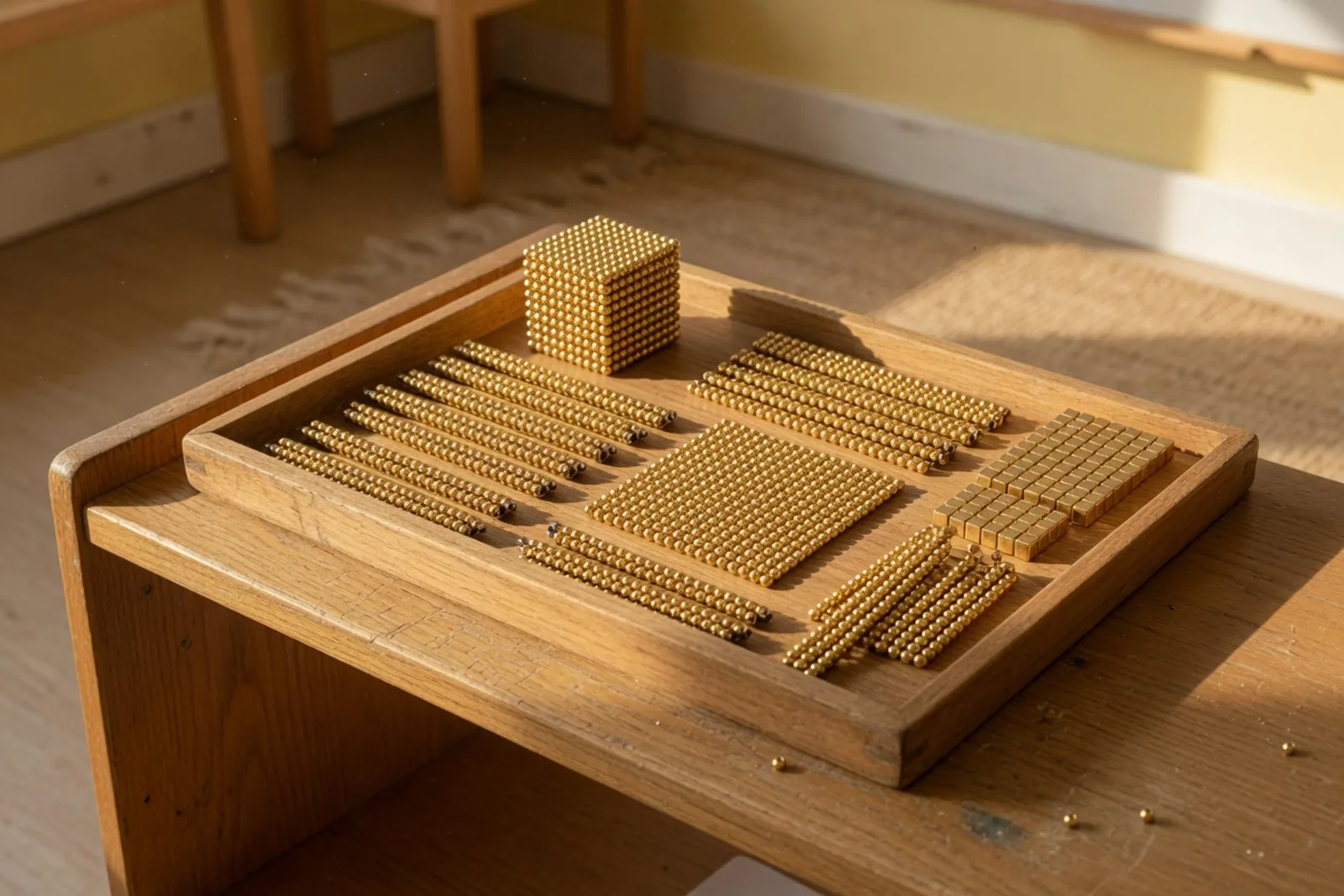
Here is what that looks like. A four-year-old unrolls a mat, carries the golden beads over one tray at a time, and builds a four-digit number, quantity first and symbols after. Fifty minutes pass without anyone telling that child to pay attention. Focus is not enforced in this room. It is protected. That protection, more than any single material, is what visiting parents notice first. Montessori called this the three-hour work cycle, and we explain why the length matters in the three-hour work cycle. You can also follow the full schedule, hour by hour, in a day in the life.
Observation
Guides who watch before they teach.
Every lesson here is a response to evidence, not a page number in a pacing guide.
Before offering new work, a guide observes: which materials a child chooses, how long attention holds, where frustration appears, and what the child does about it. The next lesson comes from those notes. This is why a visit here looks quiet. You will more often see an adult seated to the side with a notebook than standing at the front of the room. Stepping in is a decision, made child by child, and timed so it extends concentration rather than interrupting it.
The Materials
Concrete first, abstract when it is earned.
Each material isolates one concept, contains its own error check, and hands the idea to the child through the hands before asking for it on paper.
Practical life first
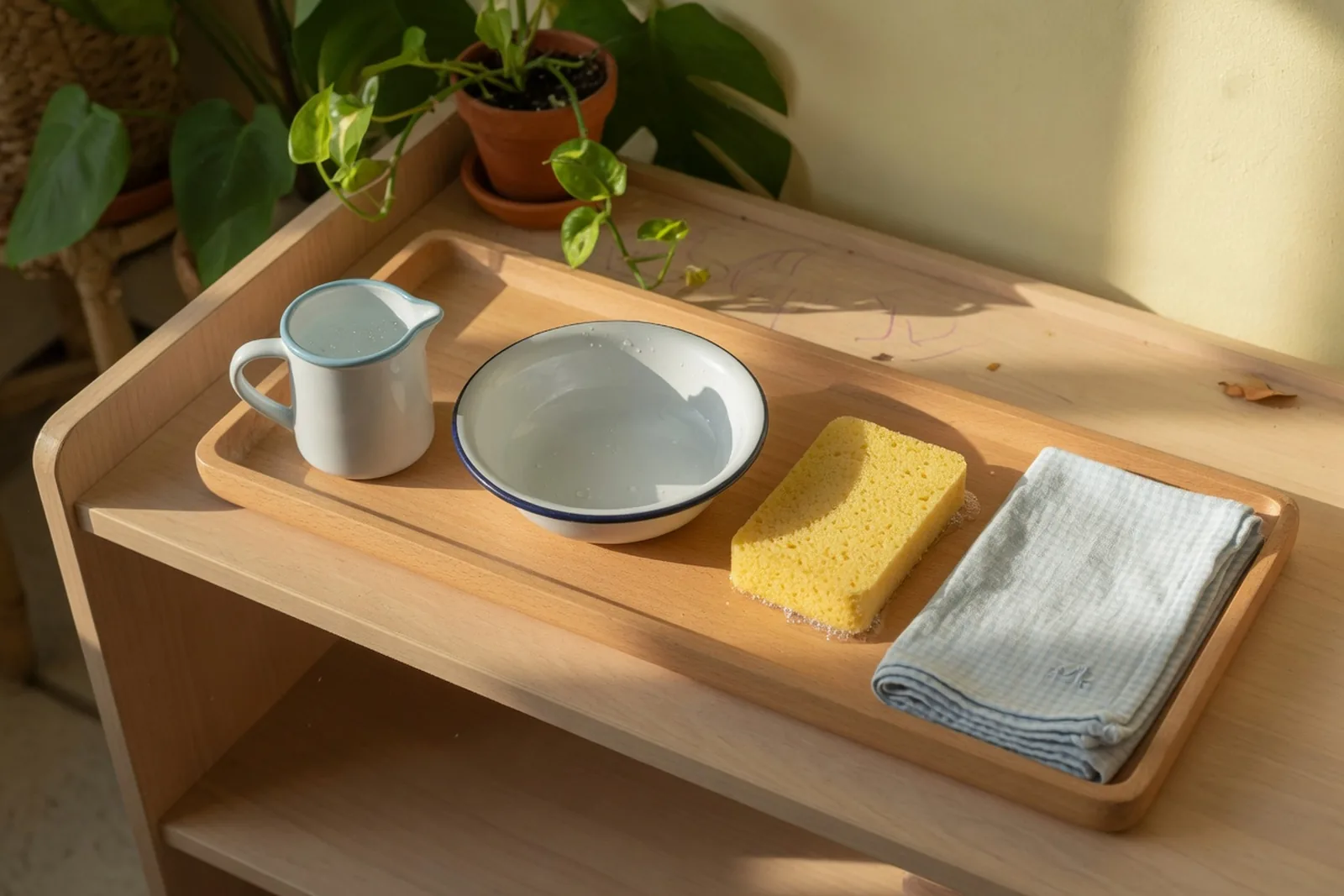
Pouring trays, spooning work, buttoning frames, and real jobs like table washing. The goal is coordinated, independent movement and the calm confidence that follows it.
Sensorial to symbolic
The pink tower trains the eye to judge dimension. Sandpaper letters put the sound of each letter under a tracing finger. The metal insets build the exact pencil control writing will need. The golden beads turn the decimal system into something you can carry across a room, and the moveable alphabet lets children build words before their hands can print them.
The bridge year
The stamp game carries addition and subtraction from beads toward paper. Reading turns fluent. The oldest children lead the classroom they once watched from the rug.
Toward abstraction
Elementary children take the same mathematics from material to notation, then set the material aside when they no longer need it. Research, writing, and long projects fill the morning.
Older Children
What the practice looks like at nine.
In the elementary room the method does not fade; it scales. Two children spend most of a week on a timeline of early civilizations, checking sources in the class library and negotiating who letters the headings. Across the room, another child drafts a letter arguing for a longer garden plot, revises it after a conference with the guide, and delivers it in person.
It is the same pattern you saw in the toddler room: prepared shelves, protected time, and an adult who watches closely and steps in precisely. That continuity, from 18 months to 12 years, is what we mean by practicing Montessori. The best way to evaluate it has not changed since 1997. Stand in a doorway and watch a morning happen.