Ages 18 months to 3 years
Toddler
A calm first classroom built at your child's height, with a 3:1 ratio and real work that small hands can do.
The work
Real work, sized for small hands.
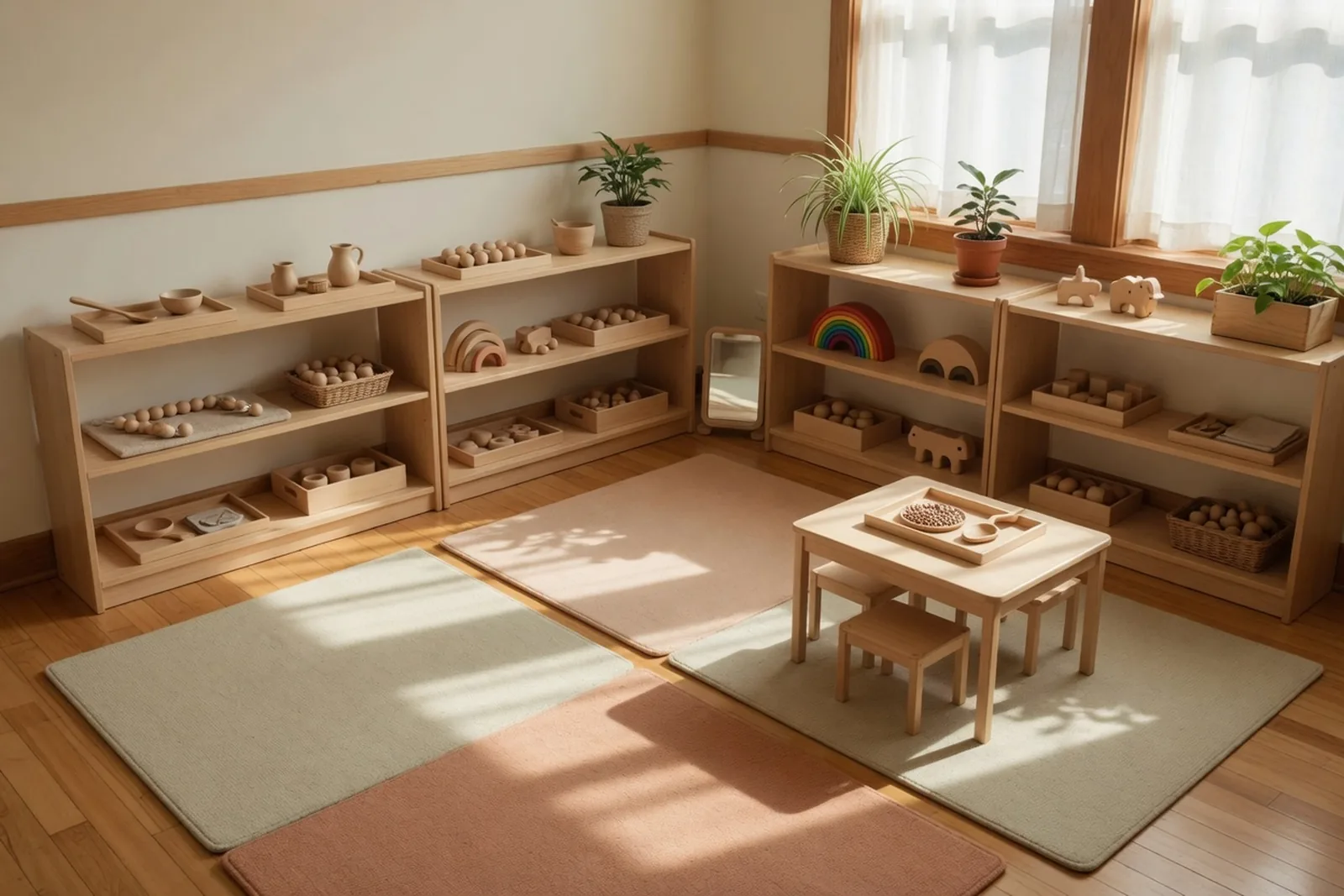
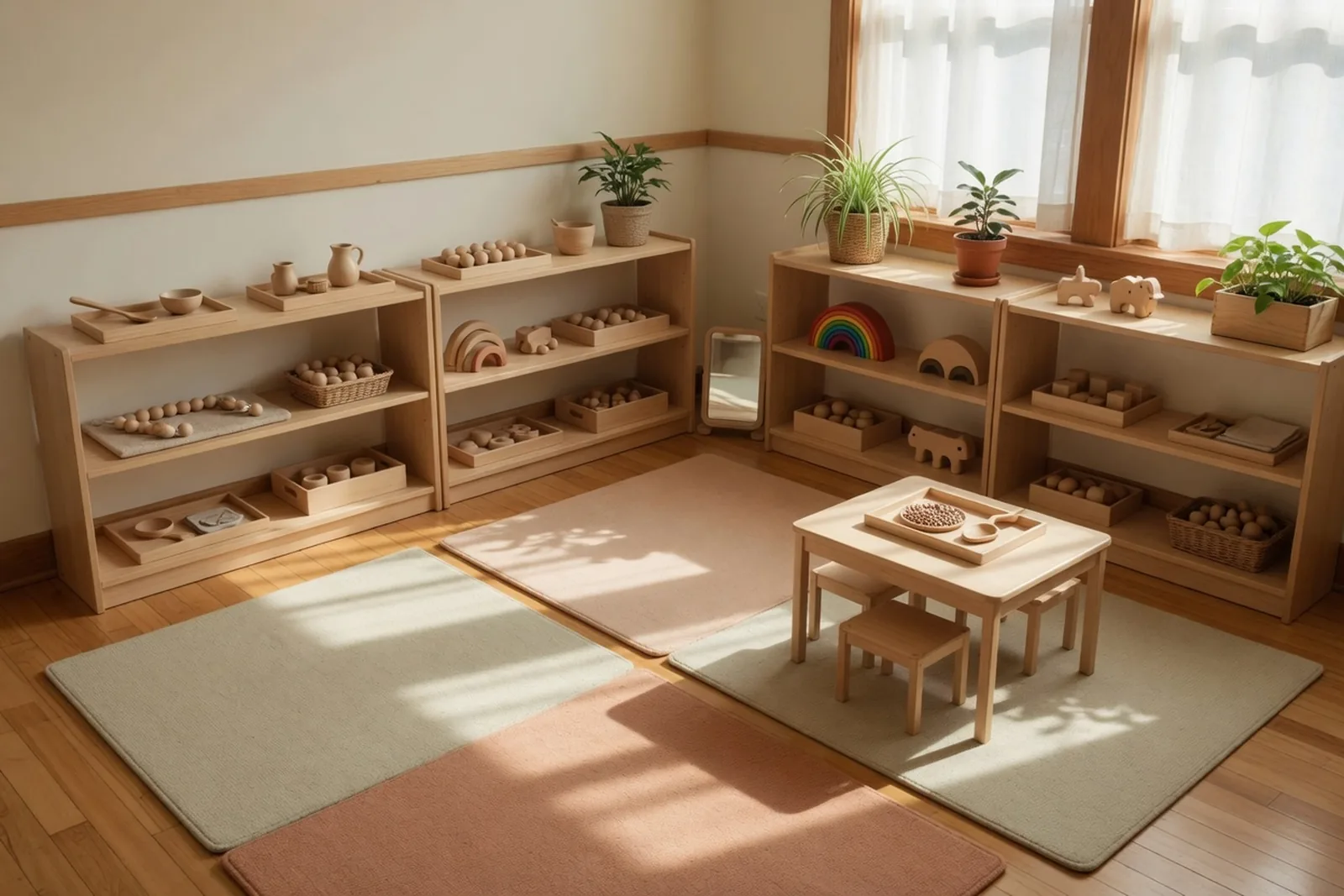
Walk into the toddler room mid-morning and you will see children working, not being entertained. One pours water from a small pitcher. Another wipes a table, slices a banana, or works the buttons on a dressing frame. This is practical life, the heart of the toddler classroom, and toddlers choose it again and again because it is real.
Close by sit the materials that feed a toddler's hunger for order: a knobbed cylinder block fitted by size, objects sorted by shape and color, a box that takes a dropped ball and returns it. Each one isolates a single idea and lets small hands repeat it until the idea belongs to the child. These are not toys that end; they are work with a beginning, a middle, and a shelf to return to.
Between 18 months and 3 years, language arrives in a flood. Our guides narrate the day in full sentences, name every object on every shelf, and read one-on-one, so the flood has somewhere to go. Most parents hear the difference at home within weeks.
The room is built for movement: low steps to climb, trays to carry, shelves a toddler reaches without asking for help. And because the same small group shares the space every day, first friendships form here too, one handed-over cup and one shared work mat at a time.
The ratio
What 3:1 means at 9:40 on a Tuesday.
One trained adult for every three children is not a brochure number. It changes what every single hour looks like.
- A diaper change is never rushed, and never treated as an interruption
- Someone sees the first unassisted pour, and says so out loud
- A guide can sit with one hard goodbye without leaving eleven children adrift
- Coats, shoes, & hands get help within moments, not after a line forms
The quieter benefit is observation. With three children to watch instead of eight, a guide notices when your child is ready for the next step and puts it on the shelf before frustration or boredom arrives. That is why our ratio sits among the lowest in Fairfax County, and why we keep it there.
The day
A toddler's day, hour by hour.
Toddlers relax into rhythm. The order of the day never changes; only your child's independence within it grows.
| Time | What happens |
|---|---|
| 7:30 a.m. | Arrival and early care: quiet hellos, books, and calm activity as the room fills |
| 8:30 a.m. | Morning work cycle: practical life, language, and sensorial work, freely chosen |
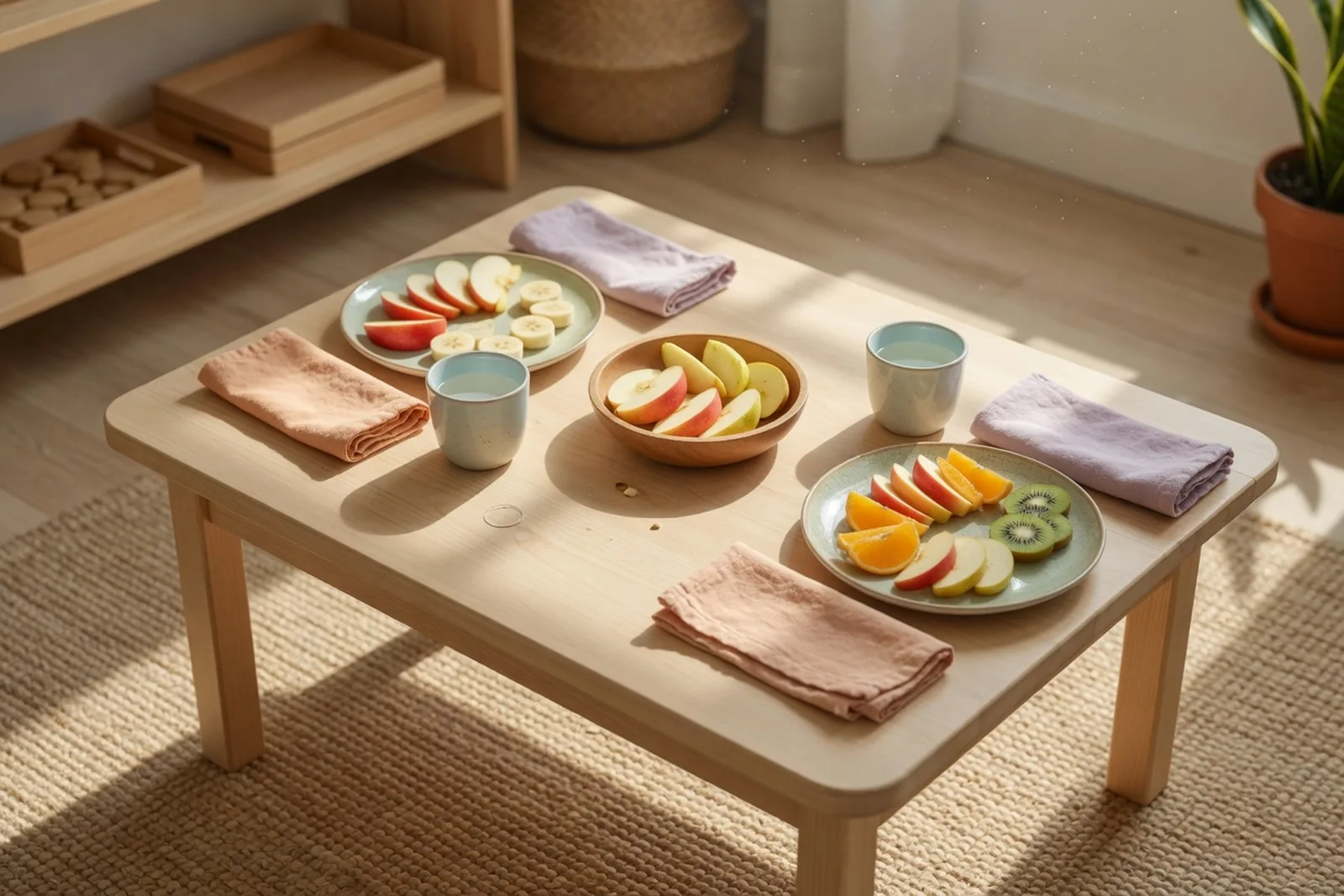
| 9:30 a.m. | Snack: children set the table, serve themselves, and clean up afterward |
| 10:30 a.m. | Outdoor time: running, digging, and carrying heavy things on purpose |
| 11:30 a.m. | Lunch, family style, with real plates and small pitchers |
| 12:30 p.m. | Rest on individual cots, with quiet work waiting as children wake |
| 3:00 p.m. | Afternoon care: snack, outdoor play, and unhurried work until pickup, as late as 6:00 p.m. |
Toilet learning
A partnership, not a prerequisite.
Children do not need to be potty trained to start here. Toilet learning is part of the work of this age, and we treat it that way: clothing children can manage themselves, unhurried time, and guides who see the whole process as learning rather than a problem to solve.
What makes it go smoothly is consistency between home and school. When you begin at home, we match your approach here, and we tell you what we see: which days went well, what your child managed alone, and what to try next. Most children finish the process during their toddler years without pressure from either side.
By spring
What parents notice by spring.
The changes arrive in small, unmistakable ways.
- "I do it myself," said about coats, shoes, & cups
- Full sentences where there were single words in September
- A child who puts things back where they belong, mostly
- Goodbyes that got easy without you noticing exactly when
- Table manners that surprise the grandparents
Around age 3, toddlers move up to Early Childhood, where the independence built in this room turns into reading, writing, and mathematics. The transition happens inside one school, with guides who already know your child.
Wondering whether your child is ready to begin? Start with the signs your toddler is ready for school, then come see the room in person. Schedule a Visit and watch a toddler morning actually happen. Families reach our Chantilly campus from across the towns we serve in Fairfax County and eastern Loudoun.
Questions parents ask
Toddler program questions, answered plainly.
Does my child need to be potty trained to enroll?
No. Toilet learning is part of the toddler program itself. We coordinate with you so home and school use one consistent approach, and most children complete the process during their toddler years, calmly and without pressure from either side.
What if my child has separation anxiety?
Expect some tears in the first weeks. They are normal, and they pass. We keep goodbyes short and predictable, the same guide greets your child each morning, and with a 3:1 ratio someone is always free to hold a hand until the work takes over. We will tell you honestly how each morning went.
Is 18 months too young for school?
Not for the right kind of room. Around 18 months, children start insisting on doing things themselves, and a toddler classroom is built to say yes to that safely. If your child is walking well, curious about everything, and beginning to imitate what you do at home, they are likely ready.