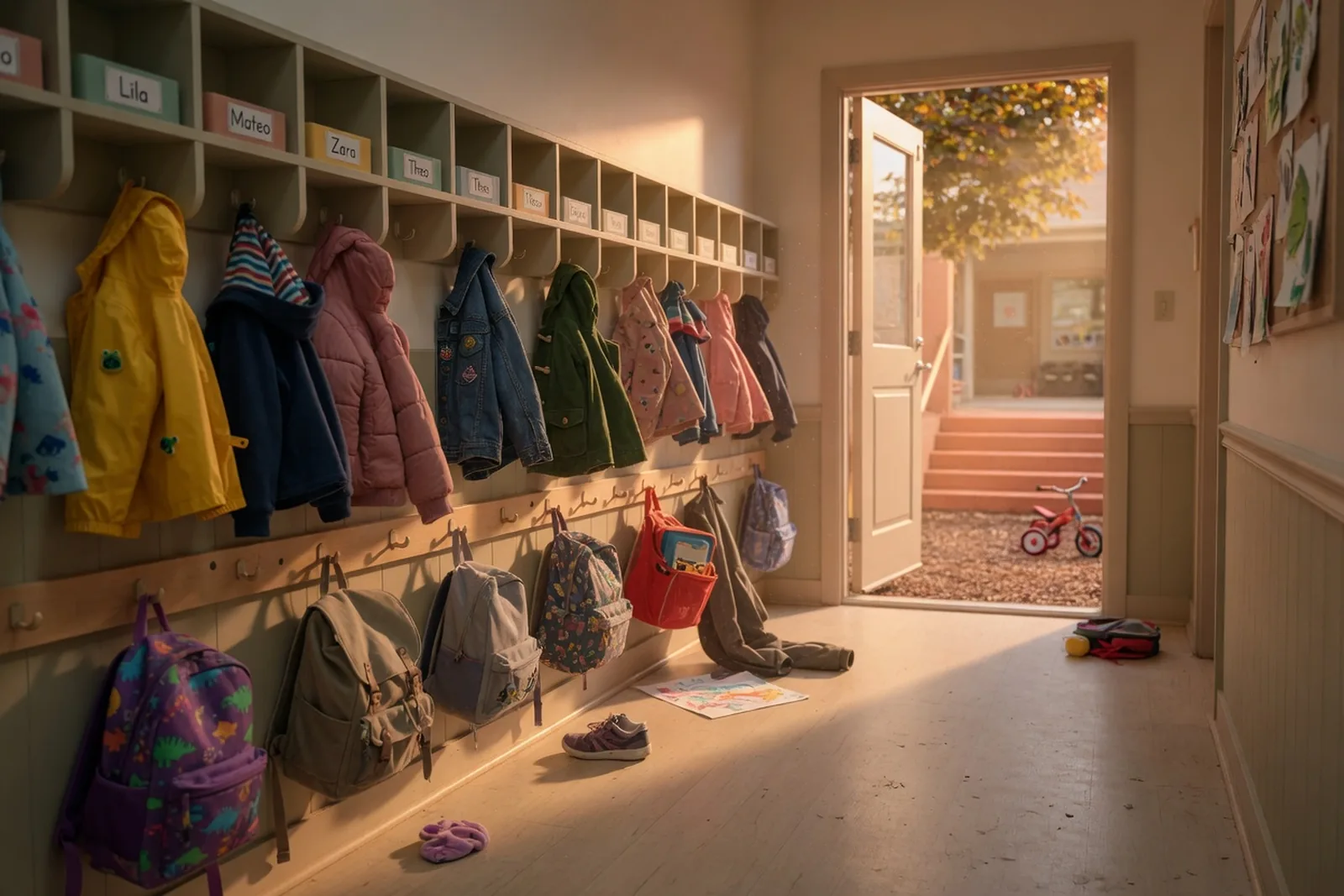
What a Tuesday actually looks like.
No highlight reel. This is the day our children actually keep, hour by hour, exactly as you would see it from a visitor's chair in the corner.
Hour by hour
The schedule is the curriculum.
Ask a Montessori guide what makes the method work and you will hear about the day's rhythm before you hear about the materials. Here is ours, from the first arrival to the last pickup, written the way a visiting parent would see it.
7:30 a.m.
Doors open, coats go up.
The earliest arrivals belong to working parents, and the room that greets them is calm on purpose. A few children read on the rug, one lays out a puzzle map, and a teacher sits low, talking quietly with a toddler about breakfast.
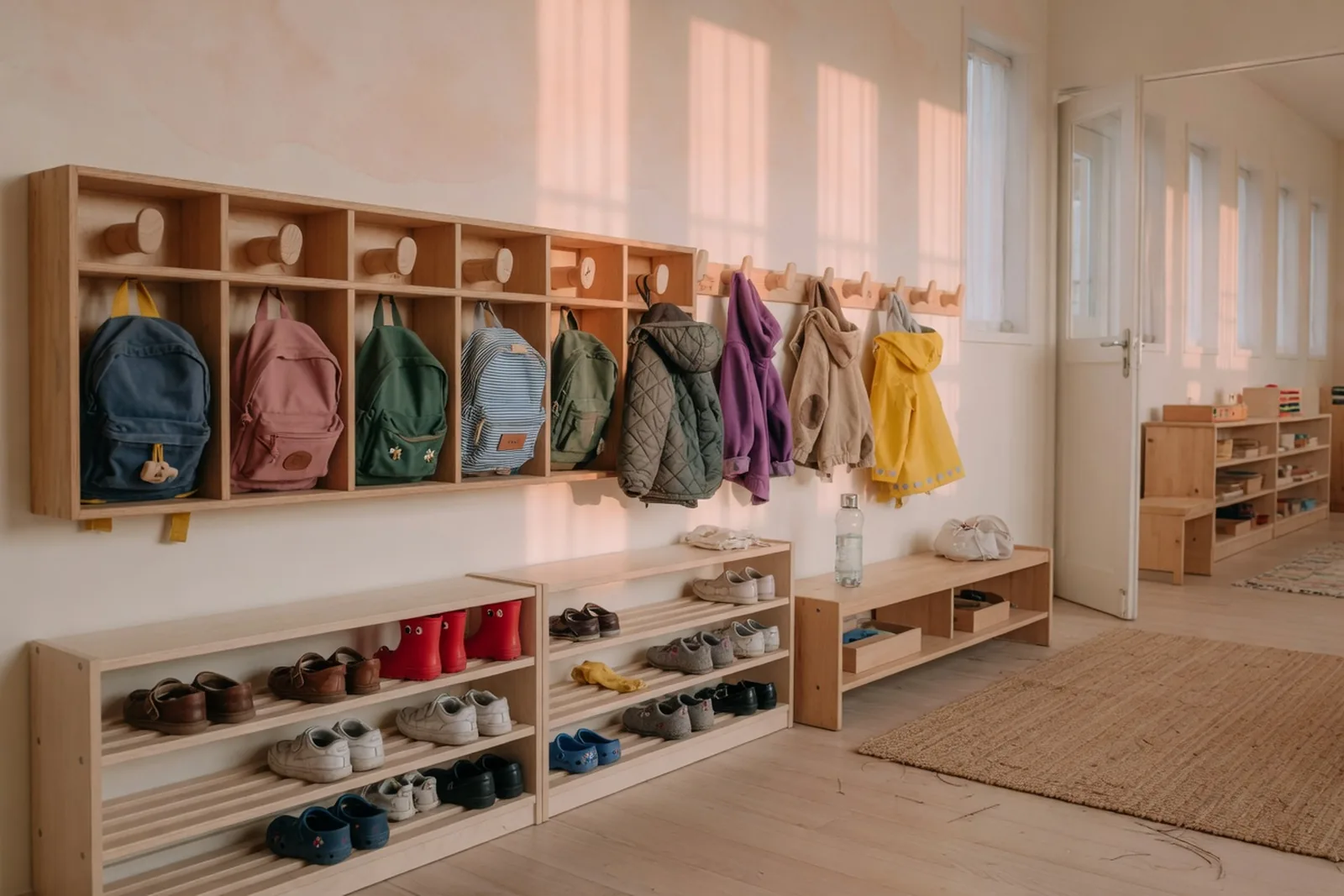
As the main arrival window builds, watch the threshold. Each child hangs a coat on a hook they can reach, changes into indoor shoes, and shakes a guide's hand at the classroom door. Nobody carries a child's backpack for them. Independence here starts at 18 months, and it starts in the hallway.
8:30 a.m.
The three-hour work cycle begins.
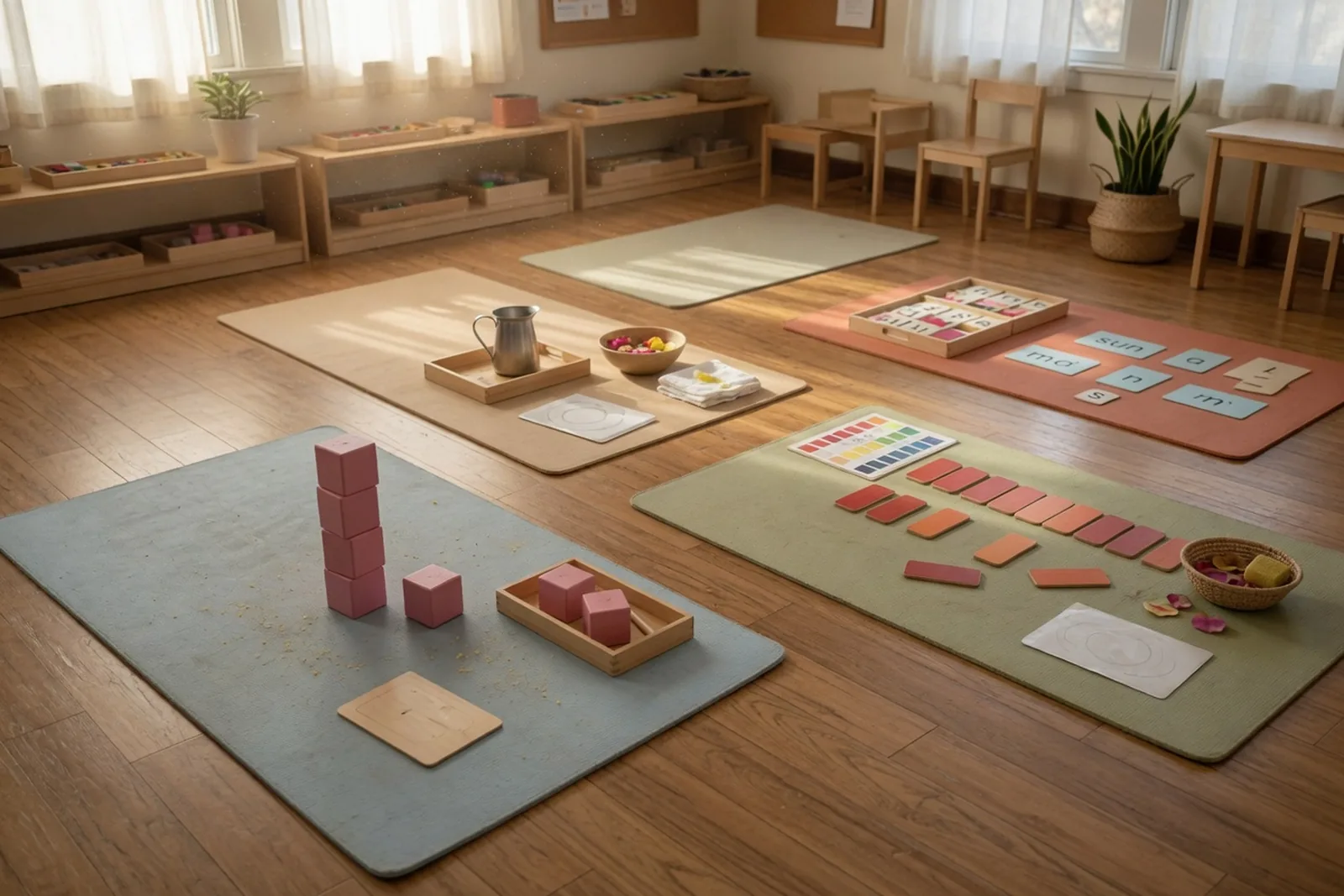
This is the heart of the day, and the part first-time visitors find hardest to believe. For three hours no bells ring and no whole-class transitions interrupt. In one corner a child stacks the pink tower by size, nearby another traces sandpaper letters with two fingers before a pencil ever enters the picture, a third counts beads into a stamp game tray. Children choose work from the shelves, carry it to a mat or a table, and stay with it as long as their concentration holds.
A guide moves through the room, giving short lessons to one or two children at a time while everyone else works on. The quiet is not enforced. It is the sound of a room full of children concentrating at once. We explain the mechanics behind what you are watching in Montessori in practice.
Mid-morning
Snack runs itself.
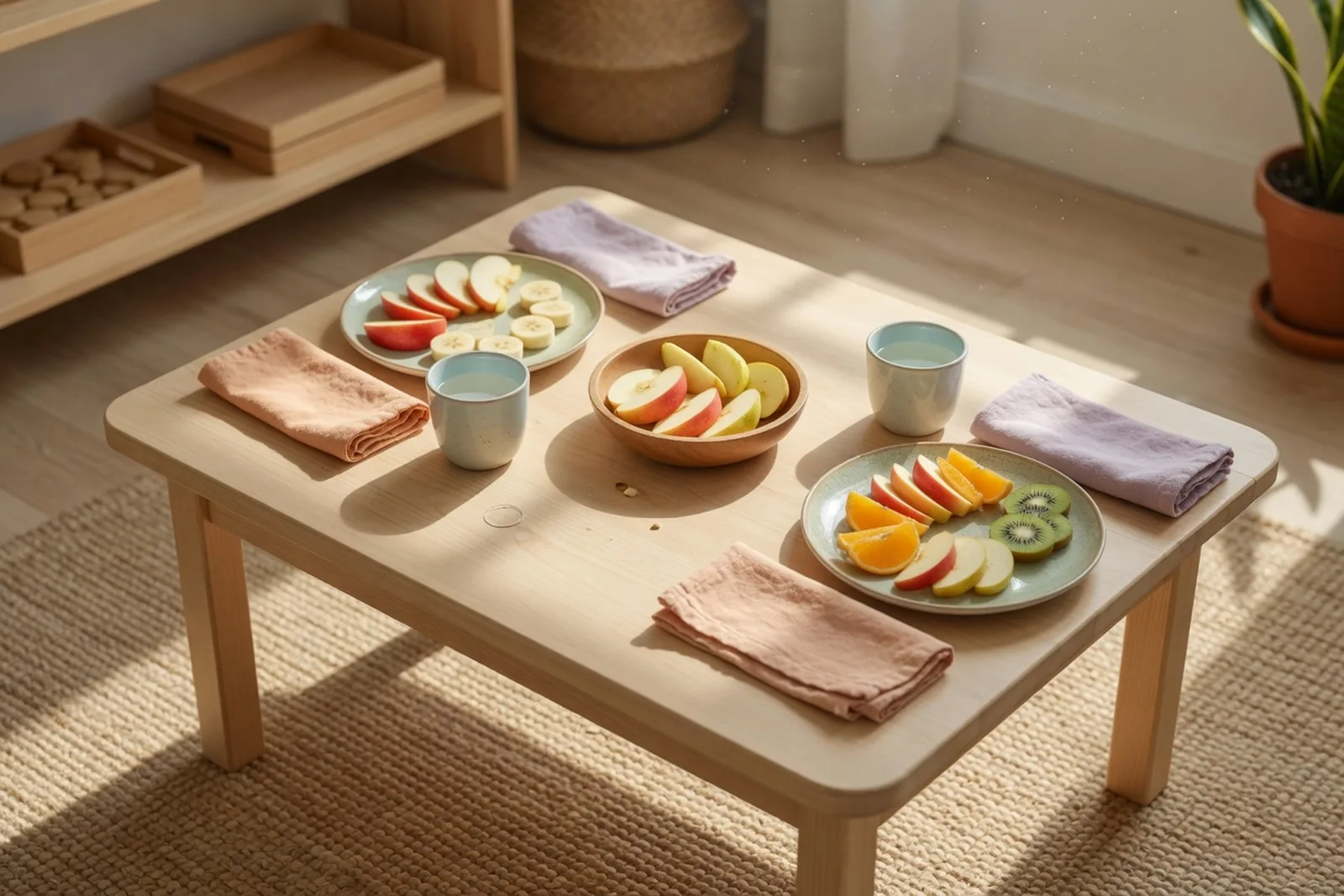
There is no group snack break. A small table seats two, and children come when they are hungry. One slices a banana, one pours water from a pitcher sized for small hands, and both wash their dishes and reset the table for whoever comes next.
This is practical life, the quiet backbone of a Montessori morning: real food, real dishes, and real responsibility for a shared space. It runs all morning without a teacher standing over it, and it may be the best two minutes you can watch on a tour. Schedule a Visit and see it for yourself.
11:30 a.m.
Out the door and into the yard.
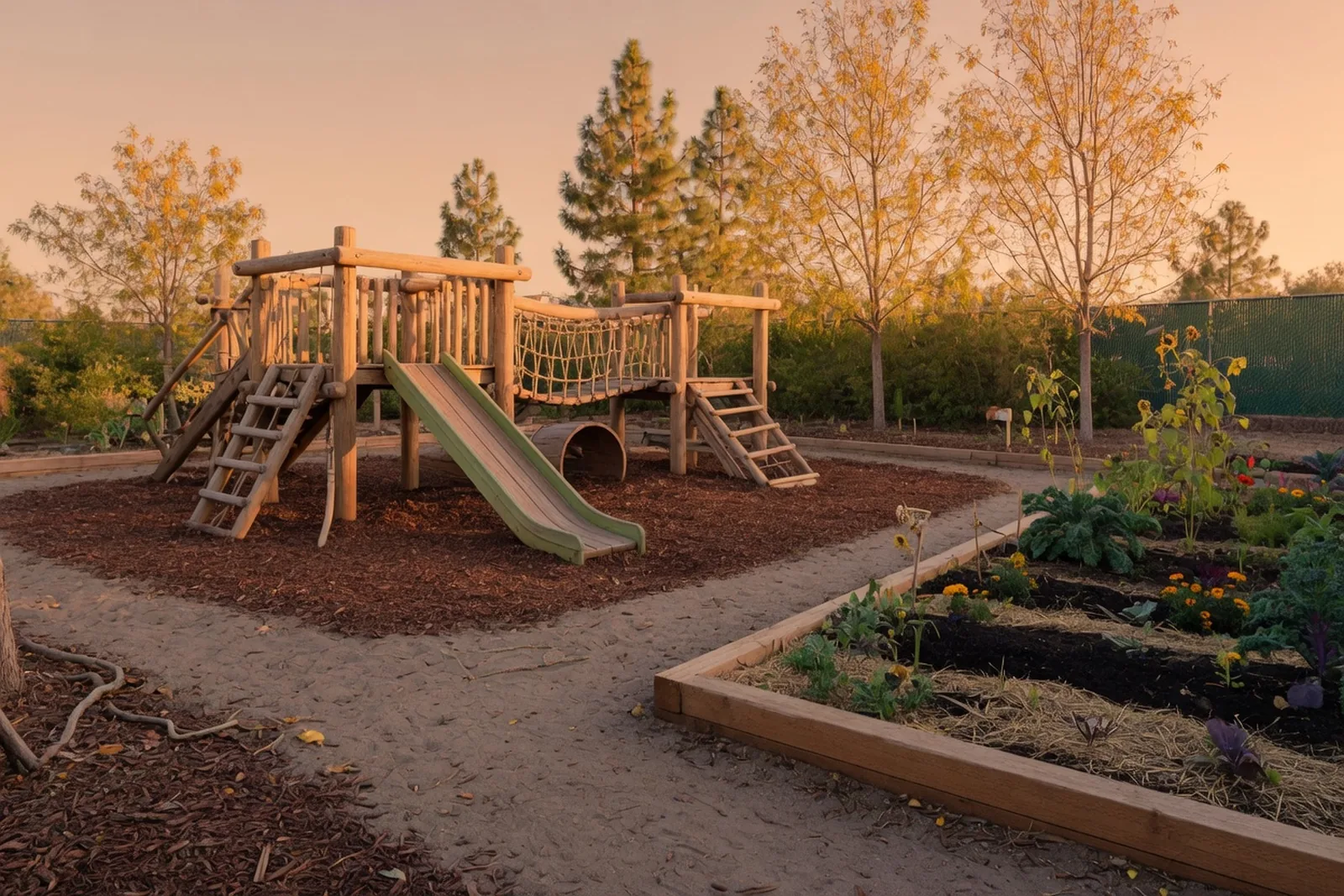
Mats roll up, work returns to the shelves, and the community heads outside. Outdoor time here is not a release valve after sitting still, because the morning already gave children movement. It is running, climbing, digging, and the slower work of the garden beds, where watering cans and small trowels wait at child height.
The guides are in the yard with the children, examining a beetle one minute and coaching turn-taking at the slide the next, not supervising from the fence line.
12:15 p.m.
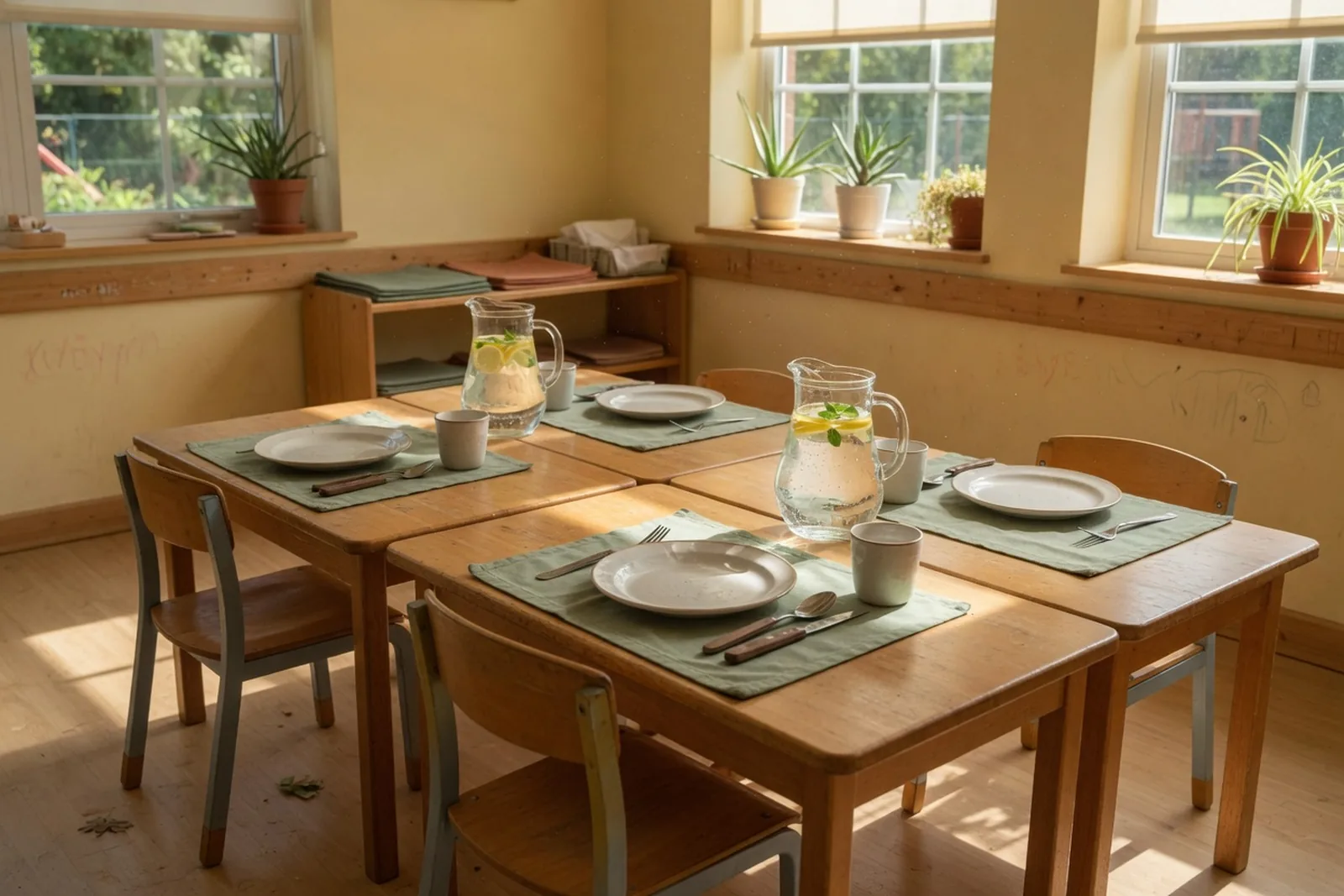
Lunch, set and cleared by the people eating it.
Children set their own places, and lunch happens at small tables in conversation-sized groups. You will see 3-year-olds open their own containers, and you will see them ask before helping a friend with a stubborn lid, because help nobody asked for is still an interruption.
Afterward the same children scrape plates, wipe tables, and sweep under their own chairs. It takes longer than an adult doing it for them. That is the point.
1:00 p.m.
The afternoon splits by age.
The youngest children nap on low cots they can climb into and out of themselves. Older children return to a second, quieter work cycle. Kindergartners often save their biggest work for these hours, reading and writing without the morning bustle, and Elementary students settle into research projects that can run for weeks. By 3:00 p.m. the rooms have the settled feel of a library ten minutes before closing.
3:30 to 6:00 p.m.
Dismissal, then a long, soft landing.
At dismissal, children gather their own belongings, check their cubbies, and walk out the way they walked in: on their own two feet, carrying their own things. For families who need the full day, after-care runs until 6:00 p.m. through our Enrichment program, with more time outside, art at the shelf, board games, and a quiet corner where Elementary students finish their work.
The last hour is unhurried by design. The remaining children help reset the environment, pushing in chairs and returning stray work to the shelves, so the room is ready when the doors open again at 7:30 a.m.