The capstone year
Kindergarten
The third year of the cycle is the payoff. Your child becomes the leader of the classroom, reading takes flight, and math moves from beads in the hand to numbers on paper.
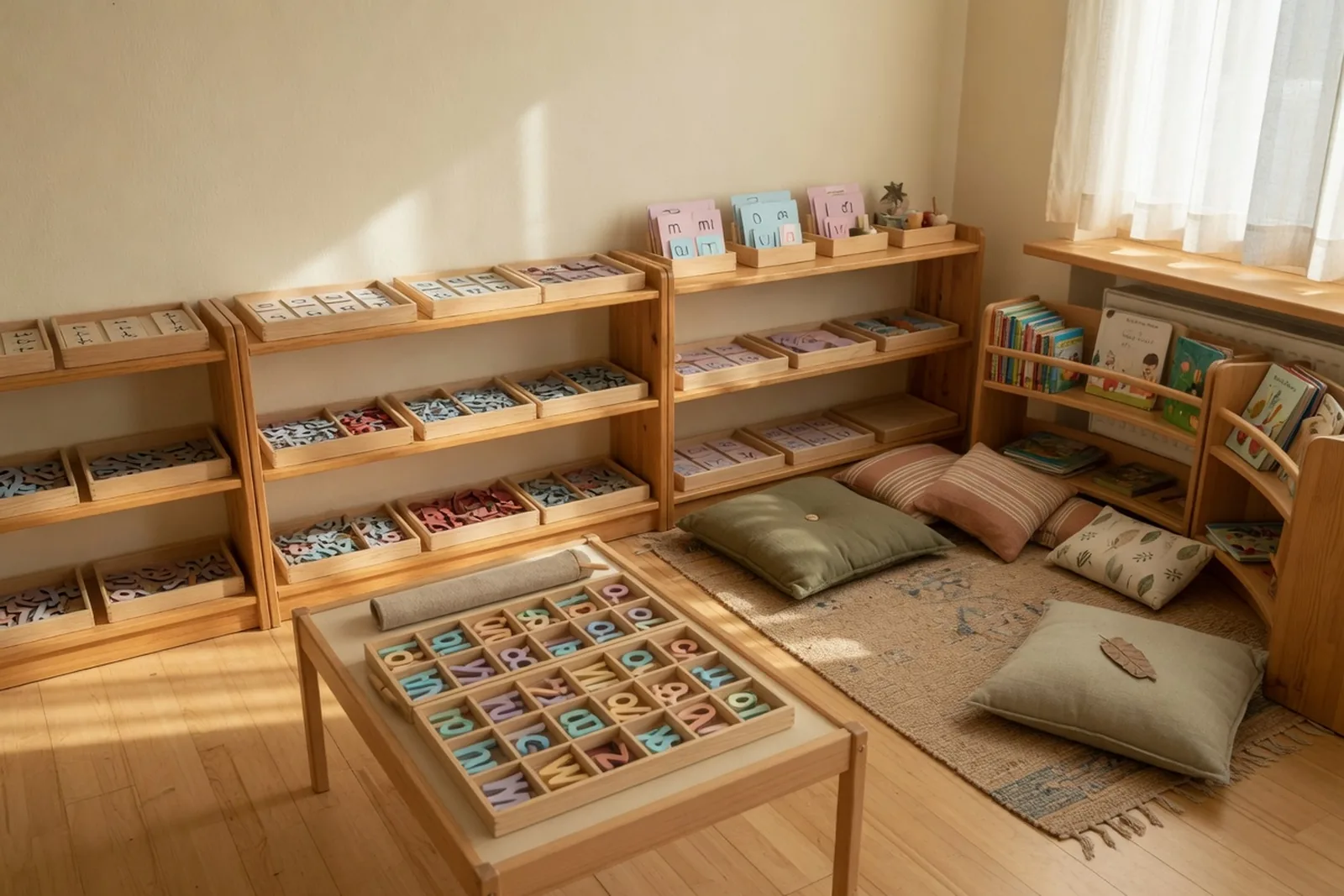
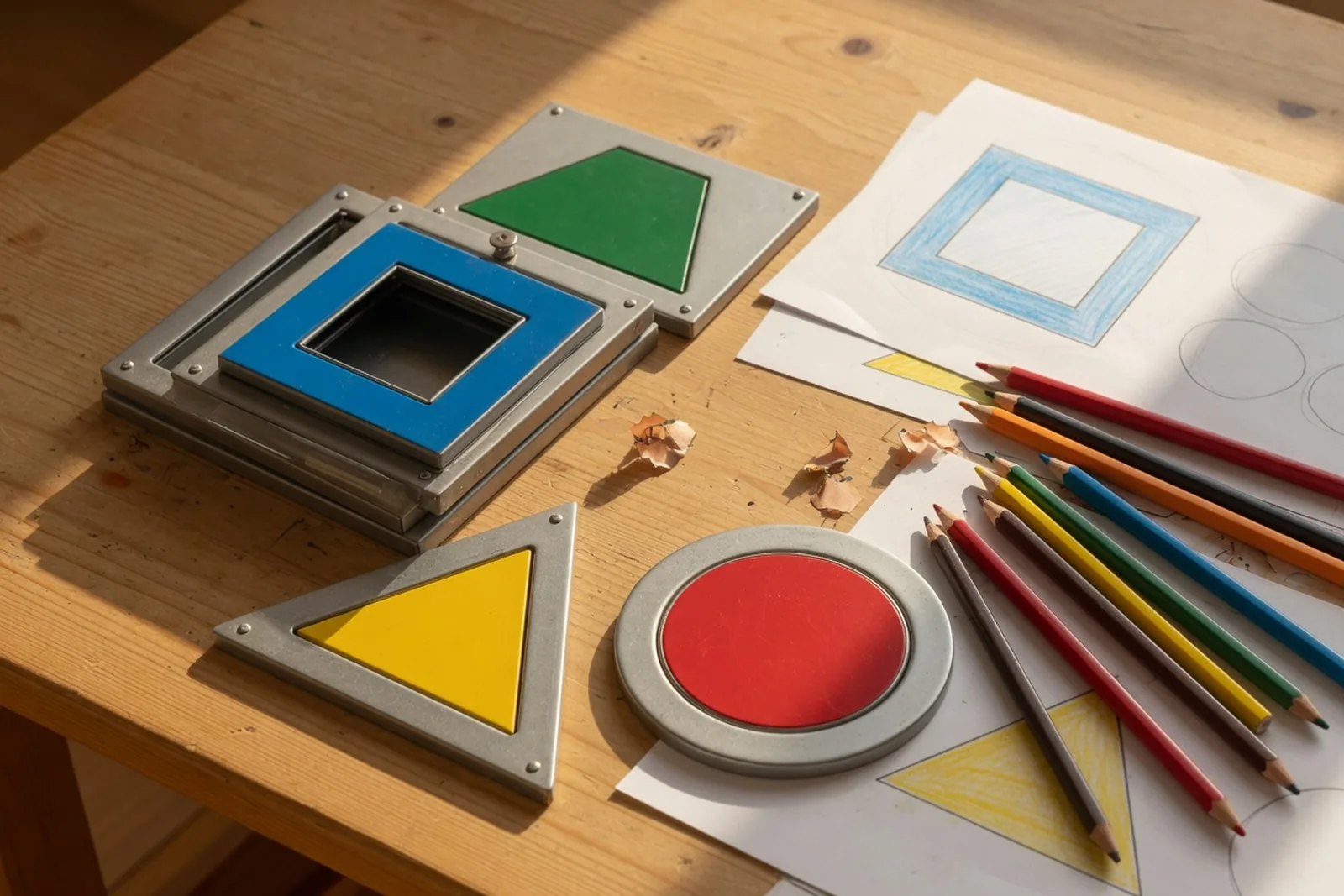
The third year
The year the cycle pays off.
A Montessori classroom runs on a three-year arc. Your child joined it at 3 as the youngest in the room, watching the five-year-olds carry the longest work. In the kindergarten year, the watching ends. The classroom, the guide, and the materials are the same, but the child's place in them has changed completely.
Everything the first two years planted comes due at once. Reading tips from decoding into fluency, math steps off the materials and onto paper, and the child who was mentored becomes the mentor. We have watched this year land for Chantilly families since 1997, and it is the one we would least want a child to miss.
The honest question
Why pay for kindergarten when public school is free?
It is a fair question, and we hear it every spring. Fairfax County runs good public schools, and many of our graduates thrive in them from first grade on. So here is the honest answer.
Public kindergarten teaches a class of twenty or more children toward one grade-level target, at one shared pace. That is not a criticism; it is arithmetic, and good teachers do remarkable work inside it. Our kindergarten year runs the other way. One child, one lesson, pitched exactly where that child stands that week, inside a room and a routine they have owned for two years. A child who is already reading keeps going. A child still consolidating takes the time, without a group waiting or a worksheet to catch up on.
The kindergarten year is not a repeat of preschool with a new backpack. It is the year the first two years were built to reach. Years one and two are the setup: hundreds of small lessons, each one quietly preparing the next. Year three is where they compound, and the return on all that patient work arrives in a rush over about nine months.
Leaving after year two is like walking out of a movie 20 minutes before the end. You saw most of it. You paid for most of it. You just missed the part that makes sense of everything that came before.
What the year delivers
Three things happen at once.
Leadership of the classroom
For two years your child watched the oldest children give lessons and set the tone. Now it is their turn. Kindergartners mentor younger children, present work they have mastered, and plan their own mornings. That responsibility changes how a child sees themselves, and it does not wash off in June.
Reading becomes fluency
The path runs from sandpaper letters to the moveable alphabet to phonograms, and in the kindergarten year it converges. Decoding turns into genuine fluency, and fluency turns into a child who reads because they want to know what happens next.
Math moves to abstraction
A child who has carried a thousand-bead cube does not think of 1,000 as a squiggle. In this year, math travels from the golden beads to the stamp game to written work, and addition, subtraction, multiplication, and division with four-digit quantities become ordinary.
First grade, ready
What our graduates walk in with.
A Montessori kindergarten graduate arrives in first grade with a specific, visible set of capabilities. Not potential. Habits you can watch.
- Reads independently, and chooses to
- Writes sentences and short compositions in a practiced hand
- Works all four math operations, on materials and on paper
- Plans a morning, finishes what they start, and puts work away
- Speaks comfortably with adults and asks for help when they need it
- Has spent a year as the oldest in the room, not the youngest
Some families continue into our Elementary program, where the same three-year arc carries on from ages 6 to 12. Others move to their base public school. Both paths start from the same place: a six-year-old who knows how to work. For a closer look at what readiness actually means, read our guide to Montessori and kindergarten readiness. Kindergarten families join us from across the towns we serve in Fairfax County and eastern Loudoun.

Questions parents ask
The kindergarten decision, answered.
How do Montessori kindergartners handle the transition to public school?
Smoothly, in our experience. A child who can plan a morning of work, follow multi-step lessons, and read independently adapts quickly to a new classroom's routines. First-grade teachers tend to notice Montessori graduates for their focus and self-direction, not for adjustment struggles.
Are the academics rigorous enough?
The Montessori kindergarten curriculum reaches well past typical kindergarten benchmarks. Children read fluently rather than memorizing sight words, write their own short compositions, and work four-operation math with quantities they have held in their hands. Rigor is not the concern parents leave with after a visit.
Do you test kindergartners?
Not with seat-time standardized tests. Guides track mastery of every lesson through daily observation and detailed records, so we can tell you precisely what your child knows and what comes next. You see the evidence yourself, in written work, in reading aloud at home, and at parent conferences.