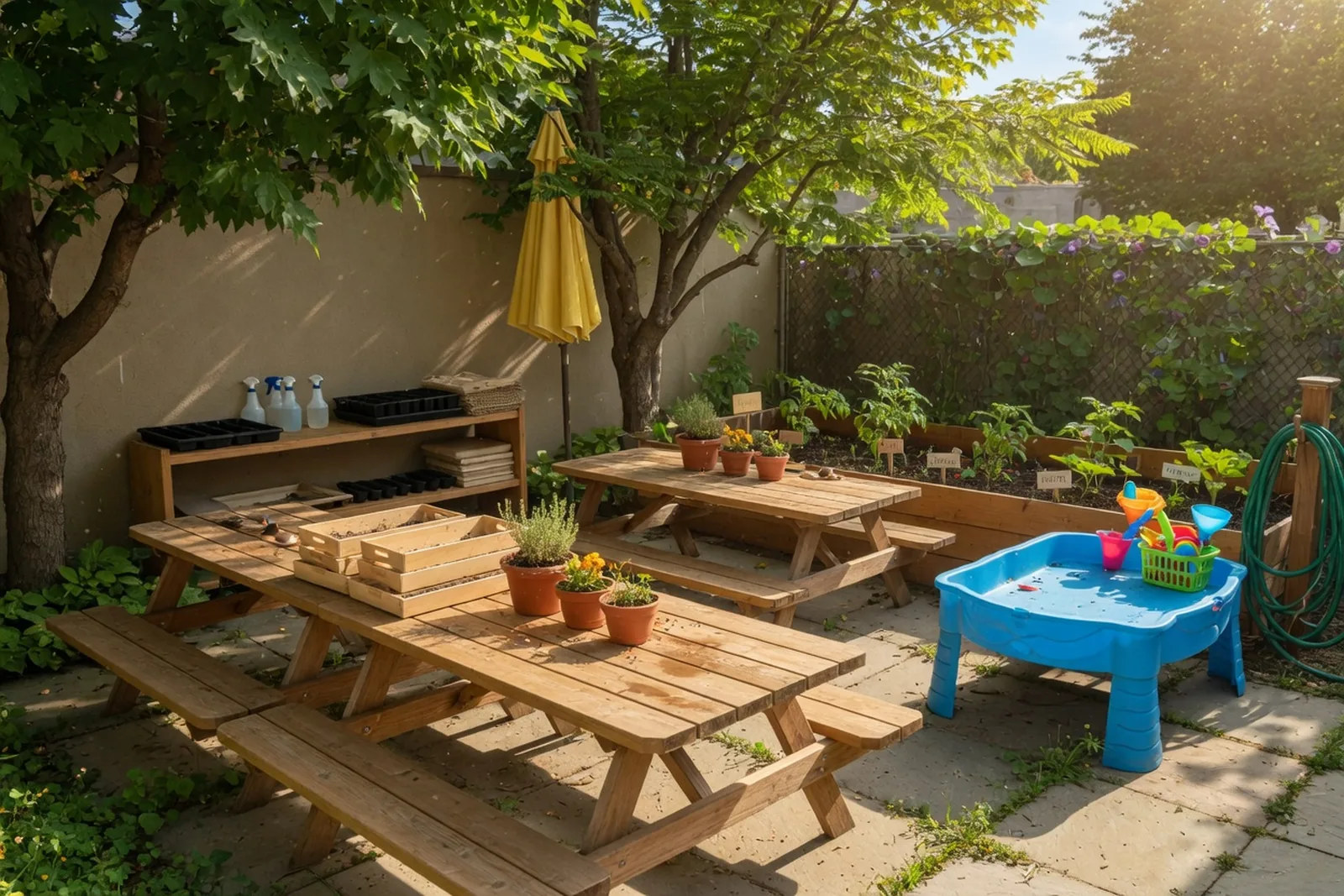
The school other schools are compared against.
Chantilly has plenty of newer Montessori schools. Here is the difference 29 years, one campus, and about 130 children make.
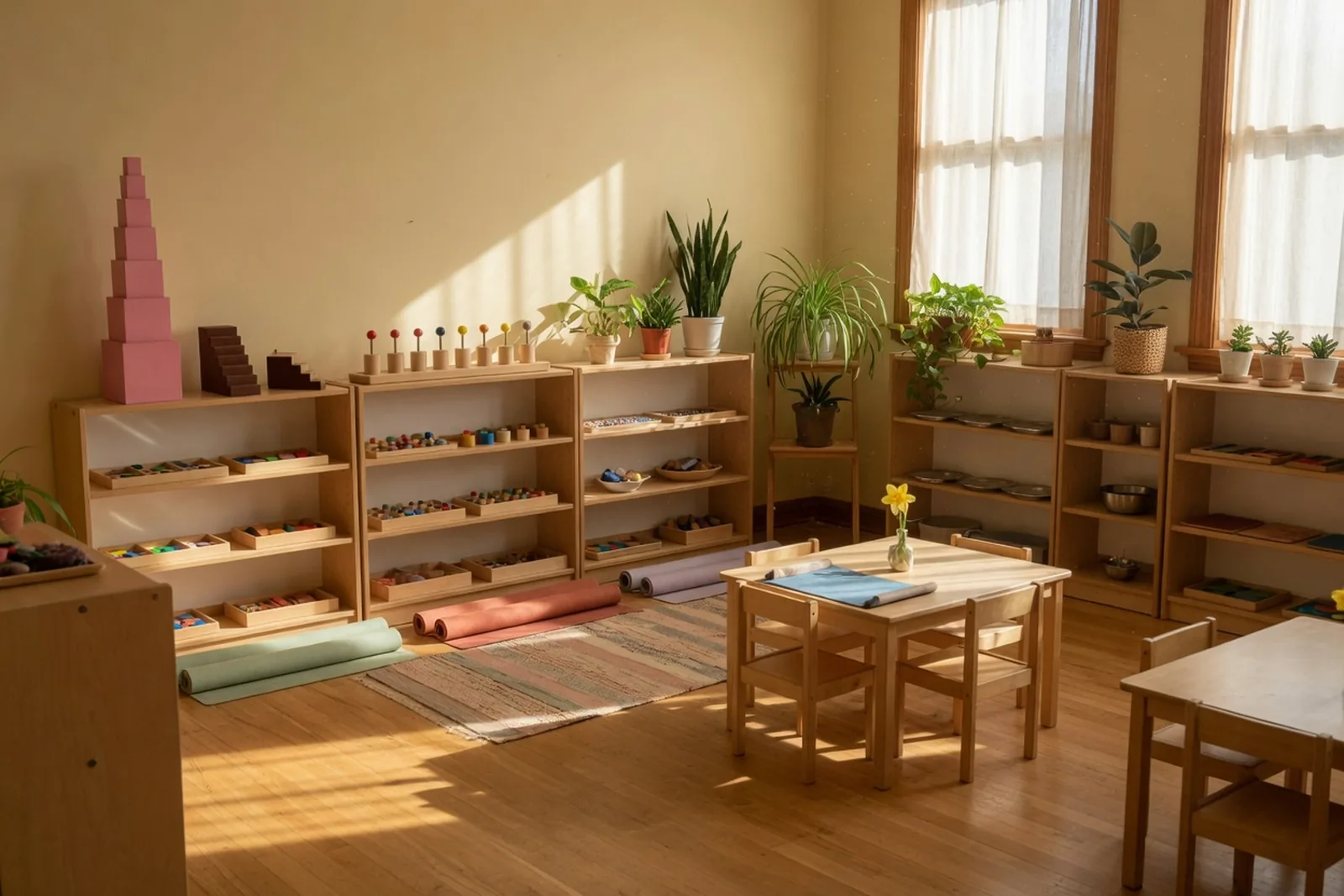
Since 1997
Twenty-nine years on the same Chantilly corner.
We opened our doors in 1997. Most of the Montessori schools you will tour nearby opened after 2012, and one belongs to a national franchise. New schools can be good schools, but they are still writing their first chapter. Ours has 29 years of them, all on Lees Corner Road.
Longevity is not nostalgia. It is the one claim a school cannot fake, and it proves three things at once.
- Guides stay. A school that keeps its teachers for decades is a school teachers trust with their careers.
- Families stay. Parents enroll a second child, then a third, because the first one thrived.
- Standards hold. A program refined over 29 years does not wobble with each staffing change or classroom trend.
The full story, from 1997 to today, takes about five minutes: read our story.
Independent
Decisions get made in the building, not at a head office.
Franchise schools answer to an operations manual and a regional office. When a parent raises a concern, or a guide sees a better way to run the afternoon, the answer often has to travel through someone who has never met your child. We are independent and locally owned. The people who decide how this school runs are the same people who greet your child at the door.
You can see the difference in small, daily ways: a materials budget set by the guides who actually use the materials, a calendar shaped around our families rather than a corporate template, and a director you reach by walking down the hall, not by filing a ticket.
Small by Design
About 130 children, every one of them known.
We enroll roughly 130 children, ages 18 months to 12 years, and we keep it that way on purpose. At this size the school stays legible. Guides know which toddler just dropped his morning nap, which kindergartner is three lessons away from reading, and which elementary student needs a harder question rather than a louder reminder.
In the toddler community the ratio is 3:1, among the lowest you will find in Fairfax County. Ratios are not a bragging right. They are the practical condition for the patience toddlers require: time to let a 2-year-old pour her own water, zip her own coat, and finish her own thought.
Our Guides
Teachers who count their tenure in decades.
Ask experienced Montessori parents how to judge a school and they will tell you to look past the lobby and ask how long the guides have been there. Ours is the answer we are proudest of.
Ms. Ruby & Mrs. Stella
The toddler room runs on patience and a 3:1 ratio. Its guides have spent years learning to wait while a two-year-old does it herself.
Ms. Najia, Ms. Zarri, Ms. Ricarda, & Ms. Sima
Four classrooms of ages 3 to 6, each led by a guide who watches the morning work cycle and knows which lesson each child is ready for next.
Ms. Pontea & Ms. Sudha
The elementary team takes research as far as a child wants to go, and hands each student ownership of their own week.
Around the classrooms: Mr. Chris directs the music program, Ms. Kathy teaches Spanish beginning in the toddler class, Coach Heather runs physical education, Ms. Karen leads yoga, and Ms. Luz, our school chef, cooks on site. Meet all of them when you visit.
Outcomes
Results you can watch happen.
Every school promises outcomes. Ours are visible on an ordinary Tuesday morning. A 4-year-old settles into one piece of work for 40 minutes without an adult redirecting her. A toddler carries his plate to the counter, scrapes it, and pushes in his own chair. A kindergartner writes a story, sounds out the hard words, and reads it aloud to a 3-year-old who will get that lesson in two years.
Concentration, independence, and kindergarten readiness are not slogans here. They are the predictable result of a method practiced correctly, year after year, since 1997. Private education is a real investment, and the fair question is what it buys; we answer it plainly in is Montessori worth the cost. If you want the research behind the method, start with why Montessori works. If you would rather hear it from parents, read their words. And if you want proof, come watch a morning happen.