What Age Should My Child Start Montessori?
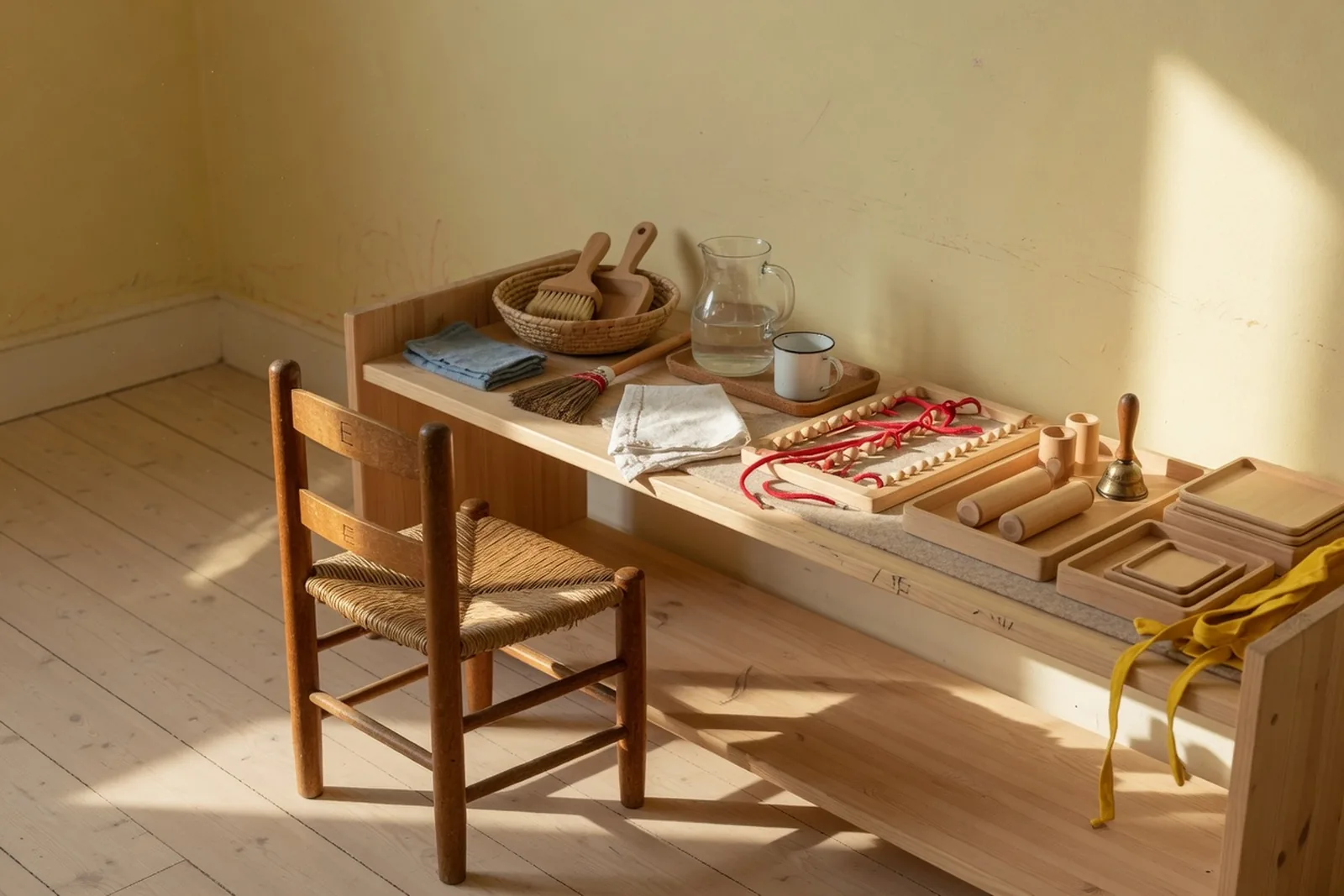
You may be asking whether your child is ready for Montessori, but the question underneath is often more personal: Will they be understood, comfortable, and able to find their footing? There is no single right birthday for starting. There are, however, useful ways to think about timing.
Montessori schools commonly welcome children at several entry points, including toddlerhood and age 3. Each can be a good beginning. The better fit depends on your child's daily rhythms, your family's needs, and the kind of transition you can make together.
Why ages 0 to 6 matter in Montessori
Dr. Maria Montessori described the early years as a time when children are especially open to certain kinds of learning. She called these windows sensitive periods. In plain English, a young child often works hard to master a skill because their brain is ready for it right then.
From birth through age 6, you may see intense interest in movement, language, order, small details, and doing things independently. A 2-year-old who insists on carrying the napkin to the table is not trying to slow down your morning. They are practicing coordination and contribution. A 4-year-old who wants the same bedtime sequence every night is building an internal sense of order.
A Montessori environment gives those ordinary drives somewhere productive to go. Materials are within reach. Routines are consistent. Adults demonstrate a task, then give the child room to try it. That does not mean a child must start school before age 6 to benefit from Montessori. It means early childhood is a particularly responsive time to offer independence with thoughtful support.
Starting around 18 months: a beginning built around daily life
At about 18 months, children are often focused on movement, simple language, and the satisfying work of doing things for themselves. A toddler Montessori classroom is designed for that stage. The furniture is child-sized, the materials are simple and purposeful, and routines turn care tasks into learning opportunities.
Your child might practice putting on shoes, washing hands, carrying a small tray, pouring water with help, or choosing a book to share. A dressing frame with big wooden buttons turns a frustrating morning task into something they can master through repetition. They are not expected to arrive toilet trained, eager to sit in a group, or able to explain their feelings in full sentences. They are learning those capacities through repeated experience, gentle limits, and connection with consistent adults.
For families, an earlier start can make the school routine feel familiar over time. It can also be a practical fit when you need reliable care during the workday. At Montessori School of Fairfax, the Toddler program serves children from 18 months to 3 years with a 3:1 toddler ratio.
Starting at 3: entering the classic Early Childhood classroom
Age 3 is another natural entry point. This is when many people picture a Montessori classroom: children choosing work from low shelves, rolling out mats, caring for plants, tracing sandpaper letters with two fingers, and building quantity with golden beads before they ever see a number written on paper.
A child who starts at 3 does not need previous classroom experience. They do benefit from a gradual introduction to the rhythm of the day. At first, they may watch older children closely, need help saying goodbye, or return to a familiar activity again and again. That is all useful information, not a sign that they do not belong.
In a mixed-age room, newer children can observe what comes next while older children model routines and care for the shared space. The Early Childhood program is for ages 3 to 6, which allows a child time to settle in, deepen skills, and eventually become one of the experienced members of the classroom.
Curious what this looks like in a real classroom?
Schedule a VisitReadiness signs that actually matter
School readiness is less about a checklist of academic skills and more about whether a child can begin a supported transition. A child does not need to know letters, numbers, colors, or how to write their name before starting Montessori. Those are among the things a well-prepared environment helps them explore.
More useful signs include:
- They show interest in doing small things themselves, even when it takes longer.
- They can be soothed by a familiar adult after disappointment or separation.
- They are beginning to notice other children, whether by watching, imitating, or joining in.
- They can manage a few predictable routines with support, such as washing hands, eating a snack, or putting away a toy.
None of these must be perfect. A child can cry at drop-off and still have a good school day. A child can be shy, highly active, slow to warm up, or still learning to use words when upset. Readiness is not a personality test. It is the starting point for a partnership among your child, your family, and the classroom adults.
What does not mean your child is not ready
Parents sometimes wait because their child cannot yet share consistently, separate without tears, sit still for a long time, or use the toilet independently. Those concerns deserve a real conversation with a school, but they are not automatic reasons to wait. Young children learn social skills by practicing them in a steady community, not by mastering them alone at home first.
Likewise, a child who has never attended daycare is not behind. The first weeks may require patience and a clear goodbye routine, but new experiences are exactly what school is for. Ask how a prospective classroom handles transitions, rest, toileting, meals, and communication with families. Specific answers are more helpful than broad assurances.
Is it ever too late to start Montessori?
No. Children can enter Montessori after age 3, during kindergarten, or in elementary years. The adjustment may look different for an older child because they have established expectations from another setting, and honestly, the first few weeks can ask more of them. A child who joins at 4 has less time with materials like the pink tower or the moveable alphabet before kindergarten than a child who started at 3, so a guide may move through early lessons more quickly to meet the child where their peers already are. A strong classroom helps them learn the materials, understand the freedoms and responsibilities, and find meaningful work without treating them like a newcomer forever.
Starting earlier can give a child more time in a three-year classroom cycle, but later starts still offer real benefits. Independence, concentration, respectful boundaries, and hands-on learning remain valuable at every age. The question is not whether you missed a narrow window. It is whether the school and classroom in front of you are ready to meet your child now.
How to decide on your family's timing
Begin with the practical details. Think about your child's age, schedule, sleep needs, and your family calendar. Then visit. Watch how adults speak to children, how children move through the room, and what happens when someone needs help. Notice whether the environment feels calm without feeling rigid.
Bring your honest questions. You might ask what the first few weeks look like, how separation is handled, which routines children learn first, and how a teacher will communicate with you. A good answer should help you picture an ordinary Tuesday, not just an idealized first day.