The Famous Montessori Alumni List, Fact-Checked
The famous Montessori alumni list is easy to find. The harder question, and the one parents are right to ask, is whether it means anything for your child. Did Montessori make these people exceptional? Or are their names simply a good story attached to a school method?
The honest answer sits between those two ideas. Several widely reported alumni did attend Montessori schools. Their stories can help us notice what the method tries to protect: choice, concentration, curiosity, and the confidence to follow a question. They cannot promise a particular career, income, or temperament. No school model can do that.
Who is commonly named as a Montessori alum?
Five names appear again and again in credible accounts of Montessori education: Larry Page, Sergey Brin, Jeff Bezos, Julia Child, and Gabriel García Márquez. Each name deserves a little context, because a list without context can turn into marketing before you have learned anything useful.
Larry Page, Google’s cofounder, attended a Montessori school in Michigan. He has often connected that experience with working independently and pursuing ideas that interested him. In a 2004 television interview with Barbara Walters, Page described Montessori as training him to be self-directed and to question what was happening in the world.
Sergey Brin, Google’s other cofounder, also attended Montessori. In that same 2004 interview, he and Page both traced their independence to Montessori, crediting it with helping them learn to do things for themselves. It is a modest observation, but it gets at a central feature of the classroom: adults prepare the environment, then step back enough for children to act, choose, repeat, and solve.
Jeff Bezos attended a Montessori preschool in Albuquerque. Accounts of his early years often describe a child who stayed absorbed in projects and resisted interruption. That detail makes a useful point about Montessori, even if it does not explain the adult he became. Deep attention is a skill worth respecting in its own right.
Julia Child recalled her own early Montessori education, writing in one of her books of being "influenced, perhaps, by my early experience at a Montessori school." Her name is often cited because her later work was so practical and sensory: observing, testing, making mistakes, and trying again. Those are habits Montessori classrooms make room for, though it would be far too neat to draw a straight line from a childhood classroom to a cooking career.
Gabriel García Márquez attended Montessori school in Colombia. Biographical accounts commonly note the experience among his early education. His place on the list can be a helpful reminder that Montessori’s appeal is not limited to technology or business. Curiosity can lead toward language, art, science, service, or a path that does not yet have a name.
What Page and Brin actually credited
The Page and Brin comments matter more than the celebrity label because they point to specific classroom conditions. They did not say Montessori taught them how to build a search engine. They spoke about independence, self-direction, and questioning.
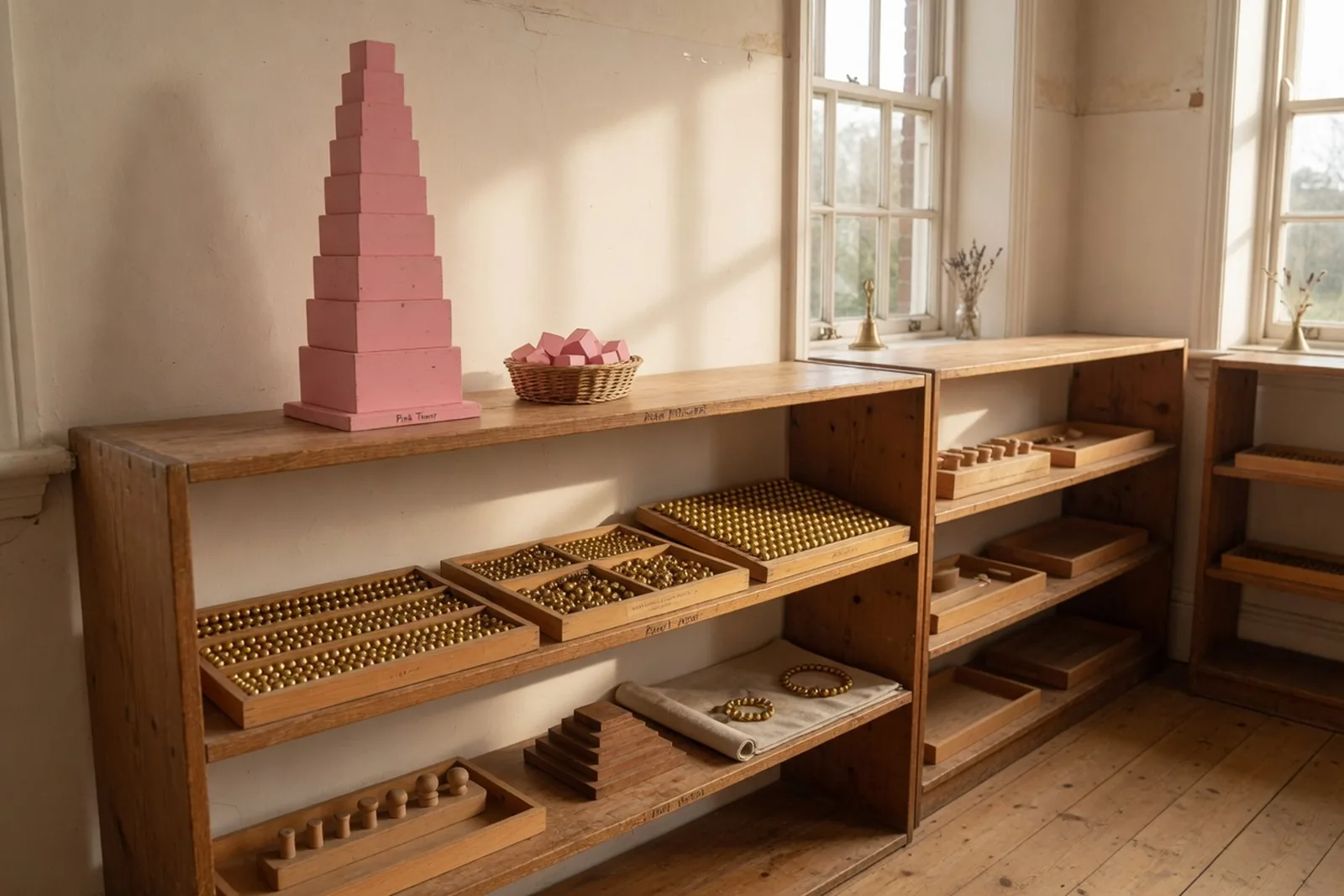
In a well-prepared Montessori environment, a child might choose between a language lesson, a mathematics material, or a practical task that needs finishing. The guide observes, gives a precise lesson when it is useful, and avoids taking over work a child can reasonably do. The child learns that effort has a sequence: choose, try, notice, adjust, and complete.
That is different from leaving children to figure everything out alone. Freedom in Montessori is connected to responsibility, clear limits, and materials designed to give feedback. A spill needs cleaning. A work mat needs rolling. A challenging lesson may need another attempt tomorrow. Over time, children come to see themselves as people who can begin something and carry it forward.
Curious what this looks like in a real classroom?
Schedule a VisitThe causation problem parents should keep in view
Famous alumni do not prove that Montessori causes fame, wealth, or creative achievement. Children attend schools within families, communities, and circumstances that shape their opportunities. The people on this list also bring their own interests, luck, persistence, and support systems. A list of successful adults cannot tell us what would have happened if they had attended another kind of school.
It also leaves out something important: the measure of a good education is not whether a child becomes recognizable to strangers. Most parents want their child to be capable, engaged, kind, and able to meet a challenge without giving up. Those outcomes are quieter, harder to put on a poster, and much closer to daily life.
So treat famous alumni as conversation starters, not evidence of a guarantee. If a school uses the list, ask the next question. What does a child actually do from 9:00 to 11:00 a.m.? How does an adult respond when a child is stuck? What choices are real, and what routines support those choices?
The real takeaway is agency and curiosity
The strongest case for Montessori is not that it produced a handful of household names. It is that children get repeated practice making meaningful choices and following their own questions with care. A 4-year-old who selects a material, uses it with focus, returns it for another child, and asks for a new lesson is building habits that matter long after preschool.
Those habits look ordinary from the outside. A child pours water, traces a letter, counts beads, reads with a younger classmate, researches an animal, or revises a plan after it does not work. Yet each act says something powerful: I can pay attention. I can ask. I can try again. I can contribute.
For a parent, the best way to evaluate Montessori is to look for those moments, rather than for a famous name on a list. Watch whether children move with purpose. Listen for questions that adults take seriously. Notice whether the room gives children a way to work through difficulty before someone supplies the answer.
That is the promise worth examining. Not a prediction of who your child will become, but an environment that takes their growing independence seriously. Learn more about the Montessori method, then schedule a visit to Montessori School of Fairfax and watch a morning unfold for yourself. No list of names can tell you what you will see once you walk in.